

























The future of the B2B customer journey: personalisation, AI and human contact
Milica Subotic6 min read
IN SHORT
The B2B customer journey has become fragmented, collective and unstable. Today you need an up-to-date map that takes account of every touchpoint, physical and digital. Personalisation is no longer an option but the standard, while AI plays the director, not the lead. And human contact? Still decisive.
Topic of our service Marketing Automation · industry B2B & Manufacturing
The B2B customer journey no longer starts with a handshake
Once upon a time, a trade fair, a business card and a well-made PowerPoint presentation were enough. Today? The B2B customer journey starts much earlier and carries on much later: from a Google search, a downloaded PDF, a comment on LinkedIn, an email read by mistake on a Friday evening. Everything counts, everything leaves a trace.
And everything has to be designed, looked after and optimised.
We live in an age where every touchpoint, even the smallest, can steer (or throw off) a purchasing decision. That’s why rethinking the B2B customer journey has become a strategic priority.
And there’s more: our buyers have changed. They have higher expectations, less time, more tools for finding information and less patience for “old school” funnels. If we really want to take them from initial interest to the final decision, we have to rethink everything. The map, the content, the channels, the people involved.
The new map of the B2B customer journey
Let’s be clear: the B2B customer journey isn’t a static diagram. It’s a living organism. Every purchasing decision is the result of a non-linear path, made up of digital touchpoints, calls between teams, chatbots, on-demand demos, newsletters and live events.
Today, a B2B customer journey map has to take account of at least three fundamental dimensions:
1. Distributed digital
B2B buyers move across several channels, platforms and times of day. They might start on LinkedIn, move on to a Google search, sign up for a newsletter, ignore it for three weeks, click on an email campaign just to read the subject line and then, months later, book a demo. The point? There’s no linearity. Our job is to guarantee consistency everywhere.
And consistency isn’t just visual or about tone of voice: it’s consistency of content, value and message. If you talk about innovation at one touchpoint and look like a 1990s catalogue at another, you lose credibility. Fragmentation has to be managed, not endured.
2. Group decisions
In B2B a single person never decides. A purchase often involves marketing, sales, procurement, IT and the C-suite. Each with their own needs, metrics and fears. Creating content and touchpoints that speak to all these stakeholders without losing consistency is the real challenge.
And this is where the B2B customer journey gets complicated. You need to map each buyer persona, understand their language and anticipate their objections. A white paper for the CFO can’t be the same as one for a product owner. Personalising by role is the bare minimum.
3. Chronic uncertainty
Longer sales cycles, smaller budgets, unstable markets. The context is fluid and trust is in short supply. That’s why you need content designed to reassure: real case studies, free trials, assisted onboarding, credible testimonials. The real lever isn’t price: it’s security.
And this is where the value of reputation comes in. If you aren’t seen as reliable, the B2B customer journey breaks off. Even if your product is better, even if you have the best price. Trust is the real conversion booster.
Personalisation in B2B: a promise (finally) kept
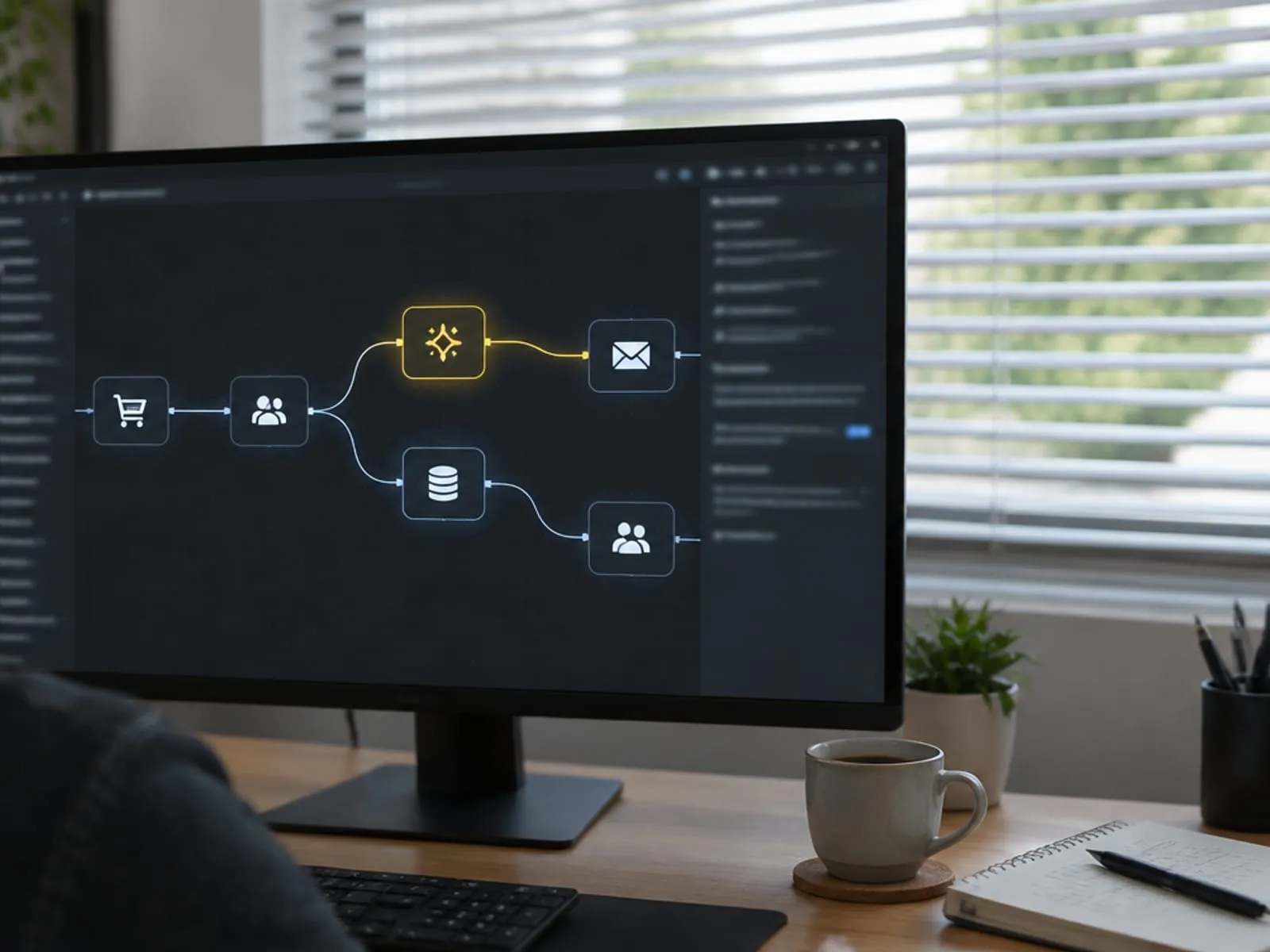
For years we talked about “one-to-one marketing” as a pipe dream. Today, thanks to smarter tools and integrated technology stacks, personalisation in B2B has become a reality.
We’re not just talking about emails with the right name in the subject line. We’re talking about fully adaptive flows: content suggested according to job role, funnel stage and past behaviour.
On the CRM side, we can identify weak signals of interest. On the marketing automation side, we can segment and activate in real time. On the content side, we can dynamically produce personalised variants.
What really matters? Not making the buyer feel like a segment, but like a person, in a team, with specific needs. That’s where personalisation makes the difference: not when we “personalise the name”, but when we respect the intelligence and context of the person we’re talking to.
The role of AI in the customer journey: director (not lead actor)
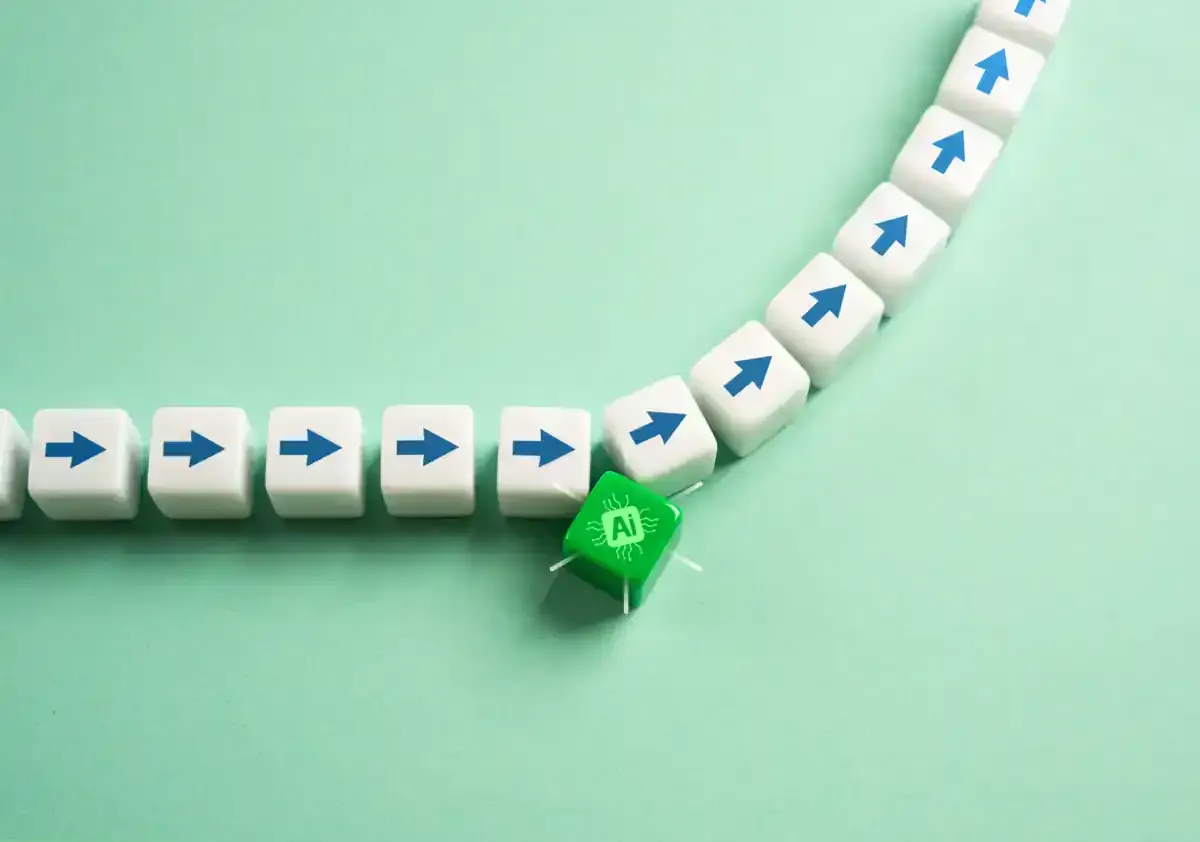
Let’s be frank: artificial intelligence isn’t here to replace us. It’s here to amplify what we already do well.
In the B2B customer journey, AI works on several levels. It can suggest content, optimise campaigns, predict an account’s behaviour and generate insights from tonnes of data. But switching on an algorithm isn’t enough to create a meaningful experience.
The real value comes when AI is put at the service of strategy, not the other way round. When content is conceived with empathy and then boosted by automation. When data isn’t an end in itself but a starting point for more relevant conversations.
And let’s not forget: every AI tool is only as powerful as the team guiding it. You need culture, experimentation and iteration. AI is a multiplier, not a shortcut.
B2B customer touchpoints: which ones count?
The truth? Not all touchpoints are worth the same.
In a mature B2B customer journey, the goal isn’t to “be everywhere” but to “be where it matters, in the right way”. A well-placed technical white paper can do more than a thousand banners. A perfectly timed email can reactivate a dormant lead. A webinar with the right people can be the spark that starts a deal.
Our job is to work out which touchpoints have high leverage and build them carefully. You don’t need 50 interactions if 5 done well will do. You need more strategy and less noise.
And this is where the B2B customer journey map comes in handy again: up to date, enriched, alive. Not a PDF to show the board, but an operational tool for marketing and sales.
And human contact? Always, thank you.
In all this digital, one thing remains irreplaceable: the human relationship.
In the B2B customer journey, it’s still a person’s voice that can clear up a doubt, provide reassurance about a decision or close a deal. The salesperson who really listens. The engineer who explains without arrogance. The account manager who calls before something goes wrong.
Humanising the B2B customer journey doesn’t mean giving up technology, but using it to free up time and attention for the things that matter. The ones measured not in clicks, but in trust.
The future is hybrid: automation for scale, humanity for impact.
What now?
The B2B customer journey isn’t planned once and for all. It has to be rewritten, recalibrated and redesigned continuously.
We’ve chosen to do it by putting five pillars at the centre:
- Re-reading the B2B customer journey map through our buyers’ eyes.
- Designing every B2B customer experience as a narrative journey.
- Making the most of personalisation in B2B, intelligently.
- Integrating the role of AI in the customer journey strategically.
- Assessing every B2B customer touchpoint for impact, not fashion.
What about you? Have you started working on your B2B customer journey yet?