


























Email marketing for sports events: from the stands to the inbox
Milica Suboticupdated on 6 min read

IN SHORT
Email marketing for sports events is a key tool for turning fans into loyal buyers. Through segmentation and personalised content, it lets you communicate in a relevant way and increase the ROI of your events. A well-structured funnel takes the user from curiosity to purchase and beyond, improving the overall experience. Automations and behavioural triggers make management simpler and recover lost sales. The real value lies in the long term: solid relationships, more engaged fans and a higher customer lifetime value.
Topic of our service Email Marketing Automation · industry Running and events
In online sports communication, where attention jumps rapidly between live results and viral highlights, there’s one channel that stoically resists the background noise: email. For us, working every day on promoting sports events, email marketing isn’t just a tool; it’s the cornerstone for building lasting relationships with fans and, above all, for filling sports events.
Handling communication for sports events effectively means going beyond social media posts. It means building a dialogue, and this is exactly where email marketing for sports events proves its worth, turning casual followers into loyal buyers of tickets, merchandise and season passes.
We want to share with you the tactics that let us maximise the ROI of every event by harnessing the power of the inbox.
Why does email marketing for sports events win?
There’s a common mistake we often see: treating all subscribers as one big mass of “fans”. This approach, sending generic messages to everyone, is the quickest way to end up in the spam folder or, worse, to make users unsubscribe. The real strength of email marketing for sports events lies in segmentation and personalised communication.
We’re not just selling a ticket; we’re selling an experience, a sense of belonging.
1. Smart audience segmentation
Before we hit “Send”, our priority is knowing who we’re talking to. We segment the list according to criteria that are crucial for promoting sports events:
Purchase behaviour: who bought standard tickets? Who preferred premium ones? Who hasn’t bought anything in the last few months?
Sport and team of interest: if we manage a portfolio of different events (football, basketball, esports), we’ll only send communications strictly relevant to each user’s specific interest.
Engagement level: who always opens our emails? Who never does? We create targeted re-engagement flows for the least active users.
Geolocation: for local events, this is essential to avoid bothering people who live too far away.
By segmenting, we can send emails that feel as though they were written just for that individual fan. For example, to a long-standing season ticket holder we’ll send a “priority booking” email in an exclusive tone, while a new subscriber will receive a “welcome pack” explaining the team’s history. This level of care is the foundation of our email marketing strategy for sports events.
2. Dynamic content for maximum relevance
We use personalisation tags to insert the recipient’s name and to change entire blocks of content. If a fan has shown interest in the “Away Shirt”, the merchandising email will feature exactly that product. If a fan has bought a “Family Ticket”, the pre-match email will include practical advice on getting in with children. This precision improves open rates and click-through rates, and helps us handle sports event communication highly effectively.
The sports event email funnel: from curiosity to purchase
Once we’ve segmented the audience, we need to build the journey that leads to purchase. Email marketing for sports events works best when it’s structured as a logical, well-timed funnel.
Stage 1: the warm-up (before the announcement)
The aim is to build anticipation without giving everything away. We start sending valuable content related to the event or the season:
- Behind the scenes: exclusive photos or videos of training sessions or of the venue being prepared.
- Exclusive interviews: short clips with athletes or coaches.
- Countdown: we use dynamic countdowns inside the emails to create urgency before the official announcement.
This approach helps us promote sports events by preparing the ground and further qualifying our audience before the sales push.
Stage 2: launch and urgency (ticket sales)
This is the crucial stage in which email marketing for sports events has to convert. Our sequences here are fast and focused:
- Official launch (day 1): a clear, concise email with a prominent purchase link and all the essential details (date, time, opponent).
- Priority and exclusivity (days 2–3): messages targeted at loyalty segments (season ticket holders, premium subscribers) with early access or dedicated discounts. This reinforces the sense of belonging.
- Urgency and scarcity (3 days before the offer ends): emails that use scarcity. “Only 72 hours left to secure your seats in the main stand!” or “Last 100 tickets available!”
Stage 3: event day (customer care and upselling)
After the purchase, email marketing for sports events doesn’t stop. We turn email into a customer service tool and a way of promoting add-on experiences.
- Pre-match/pre-race email: logistical details (how to get there, where to park, gate opening times) to improve the experience. This is essential for handling sports event communication professionally.
- Upselling and cross-selling: last-minute hospitality offers, seat upgrades or food and drink vouchers to redeem on site.
Integration and automation: making sports event communication easier to manage
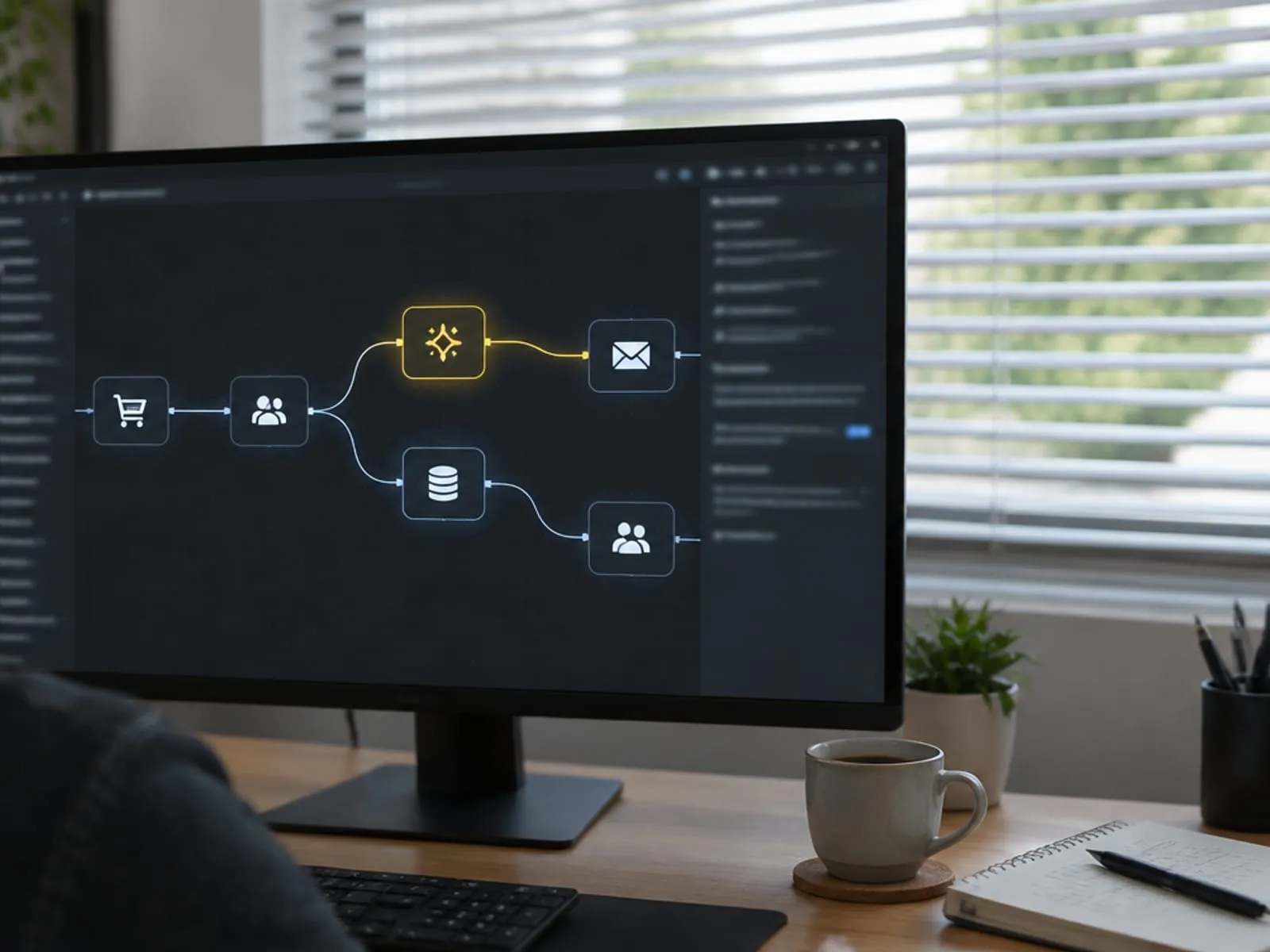
We can’t talk about email marketing for sports events without mentioning automation. It’s impossible to send by hand the dozens of personalised emails a successful event needs.
3. Behavioural triggers
We use the integration between the email marketing platform and the ticketing system/CRM. This lets us trigger automated flows based on specific actions:
- Abandoned basket: if a user selects tickets but doesn’t complete the purchase, a sequence of emails starts (with a small incentive or simply a reminder) to recover the sale.
- Successful purchase: the confirmation email, which thanks the fan and immediately provides the logistical details, is the first opportunity to set a positive tone.
4. The role of social proof
Email is the perfect place for social proof. After the event, we send an email with the best photos from the match or race, asking for feedback. Those who reply and leave a positive review are automatically added to the “Highly Engaged Fans” segment, making the next email marketing campaign for sports events even more targeted and effective. This virtuous cycle of purchase, engagement and feedback is our lifeblood.
Beyond the sale: long-term value
The ultimate goal of our approach to email marketing for sports events isn’t just to sell a single ticket, but to turn occasional attendees into season ticket holders or lifelong customers. For a sports club the next step is membership: with a membership management system like ClubRM, the lists of active members and those due for renewal update themselves in the email platform.
After the event, communication doesn’t stop. Post-event emails are used to:
- Say thank you and share content: a round-up of the highlights, the match statistics or a link to the photo gallery.
- Run surveys and gather feedback: collect opinions on the experience to improve future editions.
- Present future offers: give a preview of the next match or the season ticket, with a discount reserved for those who attended the event.
This continuous, closed-loop promotion of sports events, managed in an automated and personalised way, ensures that the investment in email marketing for sport delivers a return that is not only immediate but also long term, increasing each fan’s customer lifetime value.
In conclusion, handling sports event communication through email marketing means owning your most powerful sales and relationship channel. Don’t let your audience drift away in the sea of social media. Bring them into your inbox, speak to them directly and offer them value they won’t find anywhere else. Email marketing for sports events is a winning strategy! Get in touch today!
 FREE GUIDE · 25-PAGE PDFMarketing automation for SMEs and B2B: the 7 workflows you should already have runningSeven workflows to design with triggers, timings, content and KPIs, turning every contact into a measurable journey from the first form through to sales and reactivation.Read it or download the PDF