


























Food marketing: how food companies win online
Milica Subotic7 min read
IN SHORT
Digital food marketing works when it starts from clear positioning and consistent communication across every channel. Content that adds real value, from the blog to short videos, builds authority over time and brings in qualified traffic. Paid advertising performs best when it targets an audience that's already warm, not as the first point of contact. Influencers should be chosen on data, not follower counts. And in the end, everything is measured: cost per lead, organic traffic, conversion rate.
Topic of our service Social Media & Content · industry Food & Beverage
Food is one of the sectors where the line between content and sales is thinnest. One bad photo can kill a product. An authentic campaign can put a queue outside a restaurant. Food marketing has never been so competitive, nor so full of opportunity for those who know how to approach it methodically.
In this article we look at the digital strategies that are genuinely working for food companies, restaurants, producers and brands in the food sector. Backed by data, with concrete examples and no pie-in-the-sky theories.
Why food marketing has become a discipline in its own right
Until a few years ago, promoting a food product meant relying on TV advertising, trade fairs and shelf space in shops. Today the purchase journey is completely different.
According to research by Think with Google, 59% of users who search for recipes online do so while they’re already cooking or about to start. They’re not daydreaming: they’re deciding. This radically changes how you build a digital presence in food marketing.
Today’s food consumer has precise expectations: they want to know where the product comes from, how it was made and who’s behind it. They want ingredients they can read and understand, sustainability communicated credibly, and a story that stands up to scrutiny. Food marketing that works meets these expectations without overplaying them.
The foundations of a digital food marketing strategy
Positioning: before you even think about social media
The most common mistake we see food companies make is opening an Instagram account before answering three fundamental questions:
- Exactly who are we communicating with?
- What do we make tangible in our communication that our competitors don’t?
- What action do we want the audience to take after seeing our content?
Without these answers, food marketing becomes a pile of content with no direction. Beautiful photos, low engagement, zero conversions.
Clear positioning helps you choose the right channels, tone of voice and formats. An artisan cheese company in Piedmont doesn’t have the same audience as a sushi delivery service in Milan, even though both operate in food. Treating them with the same food marketing strategy is a mistake you pay for in wasted budget.
Visual identity: consistency that builds recognition
In the food sector, visual consistency counts double. A study by Lucidpress showed that brands with a consistent visual identity across all channels increase revenue by 33% on average. In food, where the visual impulse almost always comes before the rational decision, this figure becomes even more relevant.
Colours, typography, photographic style, the range of emotions conveyed: everything has to speak the same language. When a user sees a piece of content on Instagram, then lands on the website and then receives an email, they need to feel they’re always in the same place.
Content marketing in food: what to publish
Content that sells without looking like an advert
Content-led food marketing works when it stops talking about the product and starts talking about what the product makes possible. Not “our extra virgin olive oil is the best”, but “how to tell whether an extra virgin olive oil is really good quality: the signs you can look for on the label yourself”.
This approach has two concrete advantages. First, it builds real authority, not just perceived authority. Second, it captures informational searches, which are enormous in the food sector.
According to SEMrush data on the Italian market, terms such as “ricette con” (“recipes with”) and “come cucinare” (“how to cook”) generate monthly search volumes in the hundreds of thousands. Those who own these searches with useful content get qualified traffic at virtually no cost in the long term.
The formats that convert
In digital food marketing, not all formats work the same way. Here’s what we see in the campaigns we manage:
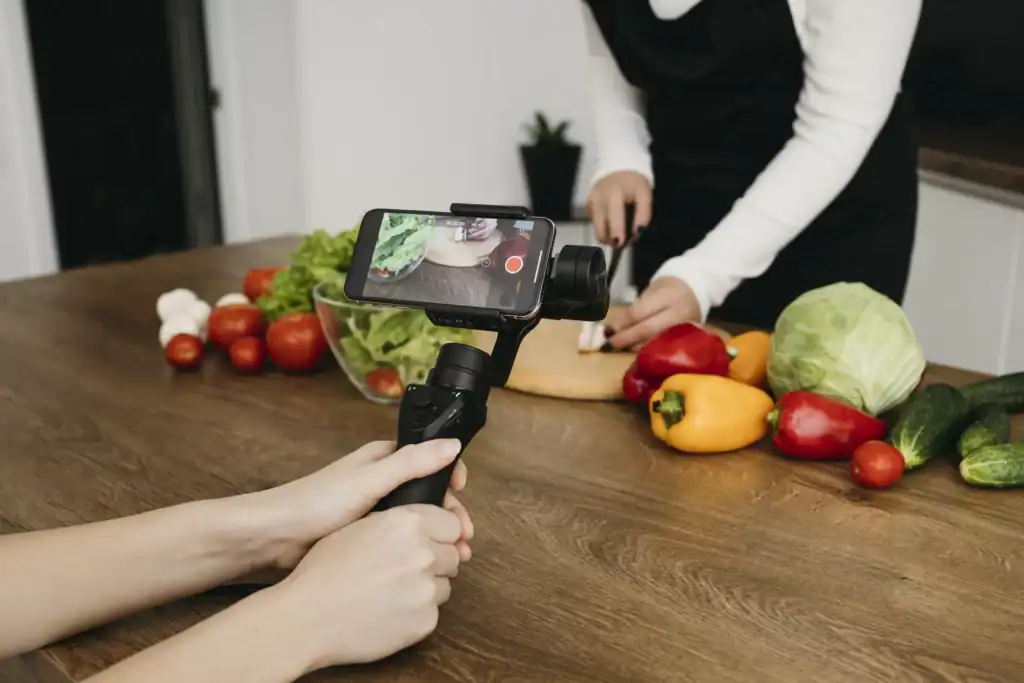
- Short videos (30–60 seconds): the format with the highest engagement rate on Meta and TikTok. For food, the “process” works better than the result: pasta being rolled out, chocolate being tempered, bread being sliced.
- Instagram carousels: excellent for educational content and practical guides. “5 mistakes you make when choosing wine” gets more saves than a photo of the wine, and saves carry weight with the algorithm.
- Blog with SEO: essential for anyone who wants to build stable organic traffic over time. Purely social food marketing is volatile; SEO is the investment that compounds.
- Newsletters: the most underrated channel in the food sector. Anyone who subscribes to a food brand’s newsletter has already shown a level of interest far above average.
Social media and food marketing: where to be and how
Instagram is still the heart of food
Although TikTok has taken a significant share of attention, Instagram remains the primary channel for most food companies. Meta reports that food content is among the categories with the highest interaction rates on the platform, with particular peaks for preparation reels and recipe posts.
The rule we apply: never publish a piece of content that doesn’t add something. Better three quality posts a week than seven identical product photos.
TikTok for food marketing: a channel you can’t ignore
TikTok has changed food marketing structurally. The “Stanley Cup” and “feta pasta” phenomena are examples of how a single viral piece of content can trigger nationwide stock-outs. You don’t build on TikTok with campaigns planned month by month as on Meta: you need speed, authenticity and a willingness to experiment.
For Italian food SMEs, TikTok is an opportunity that’s still underused. The market is less saturated, advertising costs are lower than on Meta, and organic content can still make a difference.
Google Business Profile: the forgotten channel
For restaurants, delis, wineries and any food business with a physical presence, Google Business Profile is an integral part of food marketing, yet it’s systematically neglected. According to Google, customers who find a business on Maps or Search are very likely to visit it within 24 hours.
Updating the profile, replying to reviews, uploading recent photos and keeping opening hours and menus up to date: tasks that take little time and deliver measurable results in bookings and visits.
Food marketing and influencers: how to choose without wasting budget
The influencer question in Italian food marketing is complicated by a substantial lack of transparency around data. Profiles with 80,000 followers that generate 12 clicks of traffic to the website are not unusual.
Before any collaboration, we always ask for three things:
- Insights from the last 90 days (organic reach, not followers)
- The save rate on food posts (not just likes)
- How well the audience matches our geographic and demographic target
A micro-influencer with 8,000 followers who are genuinely interested in local artisan food can generate more conversions than a profile with 200,000 followers and a mixed, poorly qualified audience. In food marketing as elsewhere, relevance beats size.
Advertising in food marketing: when to invest and in what
Paid advertising in food marketing works best when it targets segments that are already warm, meaning people who have already interacted with the brand or who share characteristics with existing customers.
Pure awareness campaigns in food have high CPMs and a long path to conversion. In most cases it makes more sense to invest in retargeting and lookalike audiences once you’ve built a minimum organic base.
For restaurants, local campaigns on Meta with a tight geographic radius remain among the most efficient in terms of cost per booking. HubSpot reports an average CTR for the food & beverage sector on Meta of around 1.3%, with costs per click considerably lower than the average in other sectors.
Measuring food marketing: the metrics that matter
Food marketing can be measured. Not by follower counts or likes, but by metrics with a real impact on the business:
- Cost per lead or per booking (for restaurants and venues)
- Organic traffic and rankings for sector keywords (for brands with an e-commerce site or blog)
- Website conversion rate (visits that turn into orders or enquiries)
- Customer lifetime value (how much an acquired customer is worth over time)
- Newsletter open and click rates (a sign of the quality of your database)
Without these numbers, food marketing remains a creative activity without accountability. With them, it becomes an investment with a measurable return.
Strategy first, tools second
Digital food marketing isn’t complicated in principle: it requires clarity on positioning, consistency in communication, content that adds value and data to guide decisions. The difficulty lies in sustained execution over time, which is exactly what most food companies struggle to maintain in-house.
If you’re building or reviewing your company’s food marketing strategy and want to work out where to start, we can assess it together. Book a call and we’ll look at your specific situation.