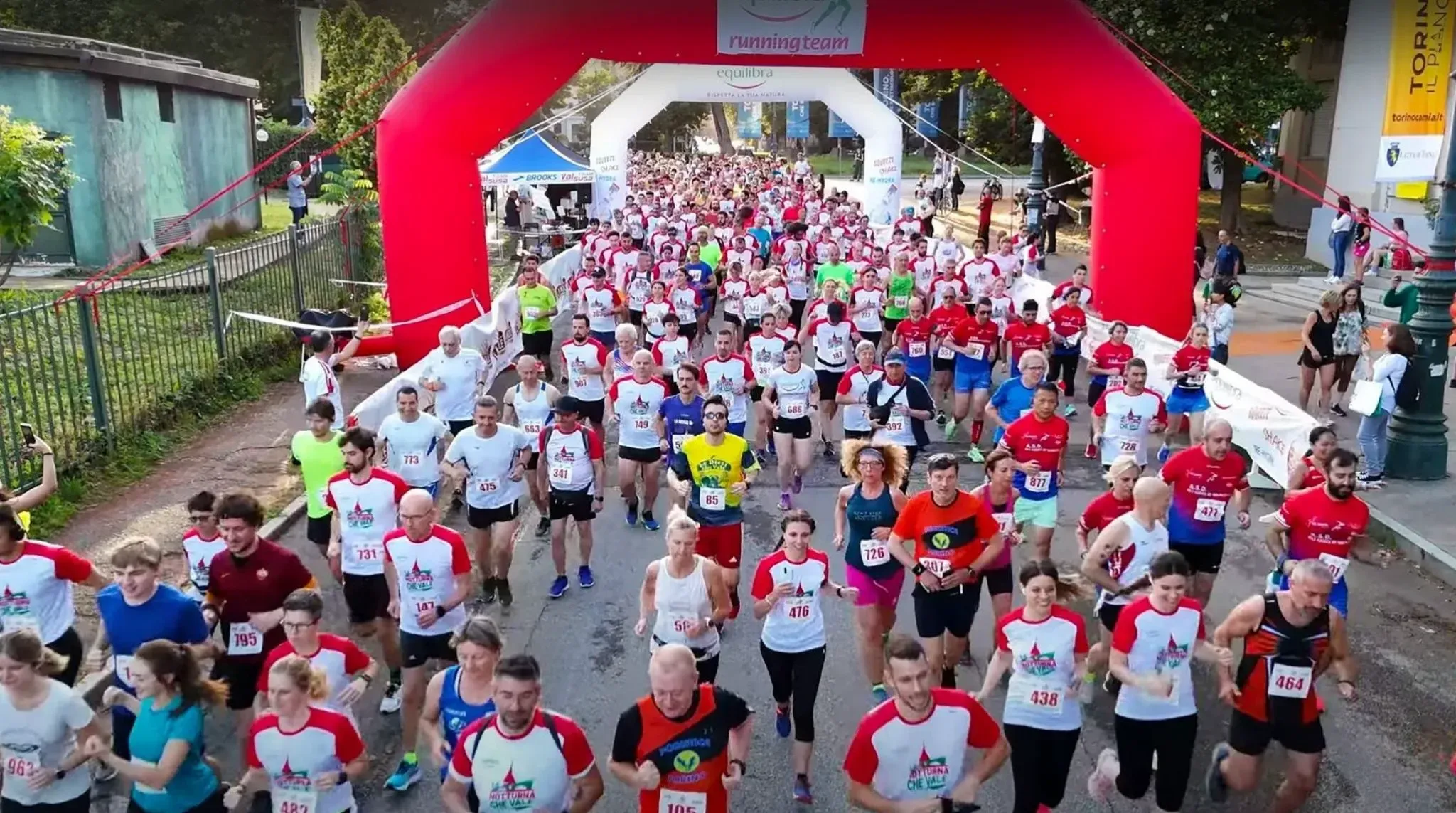
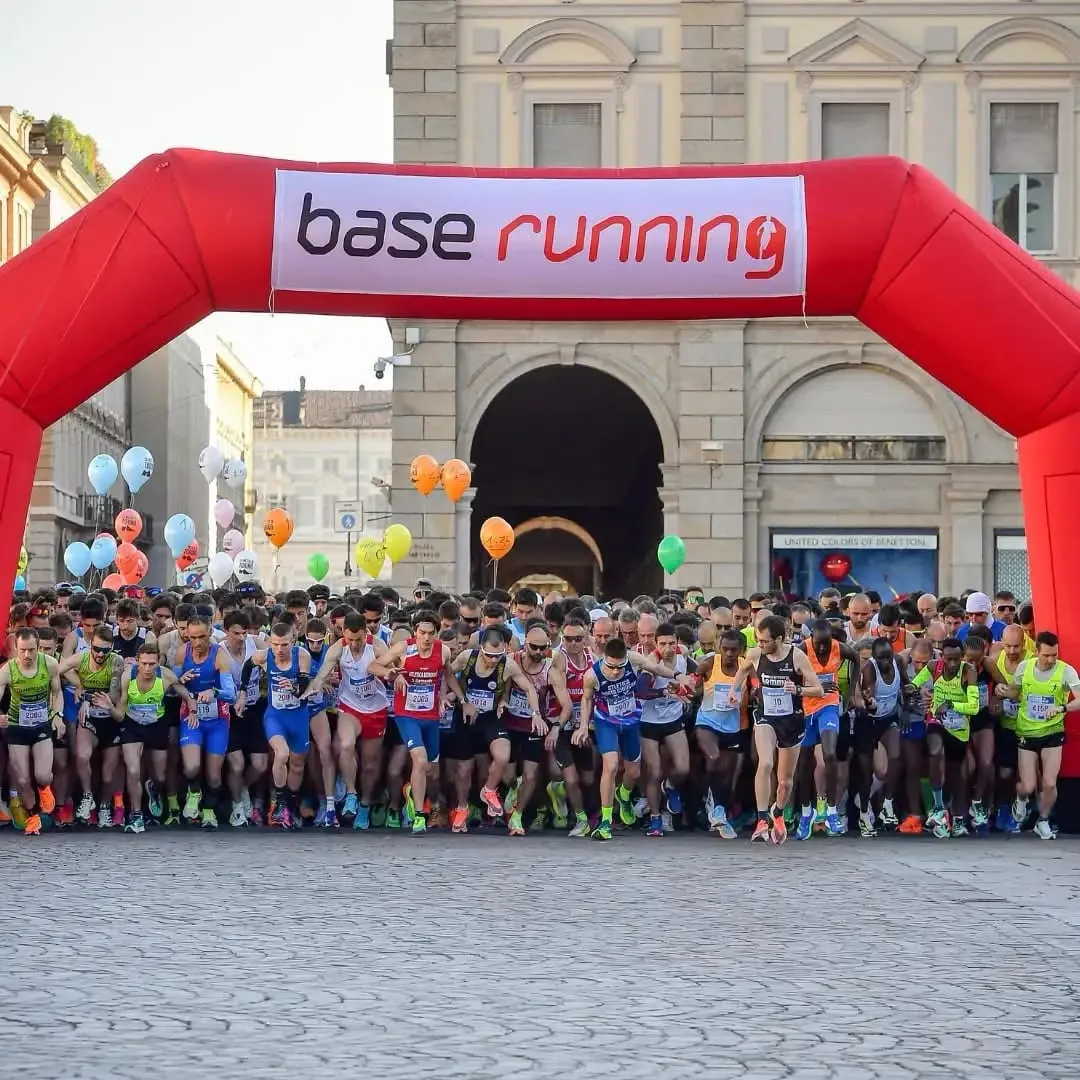





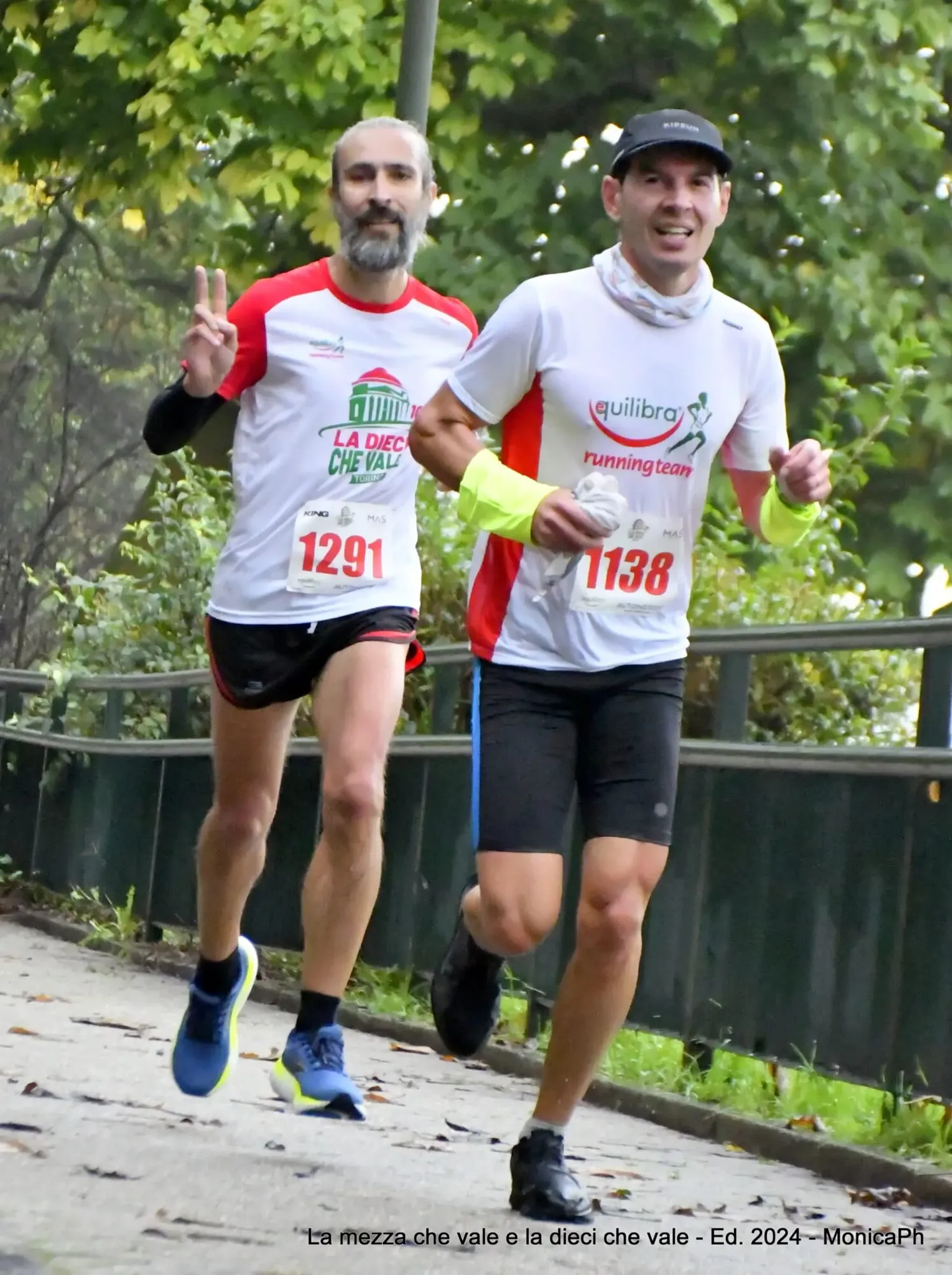

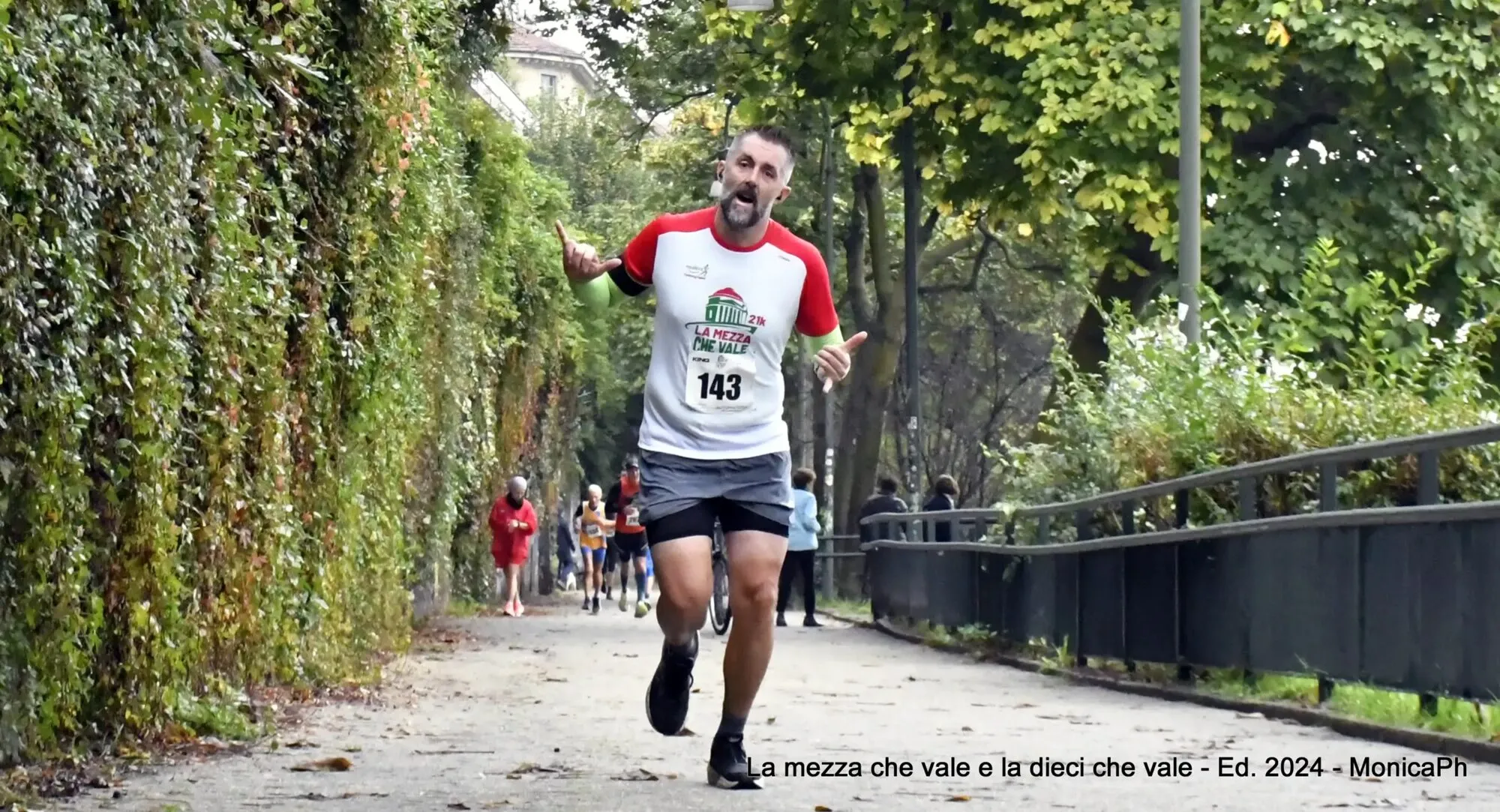























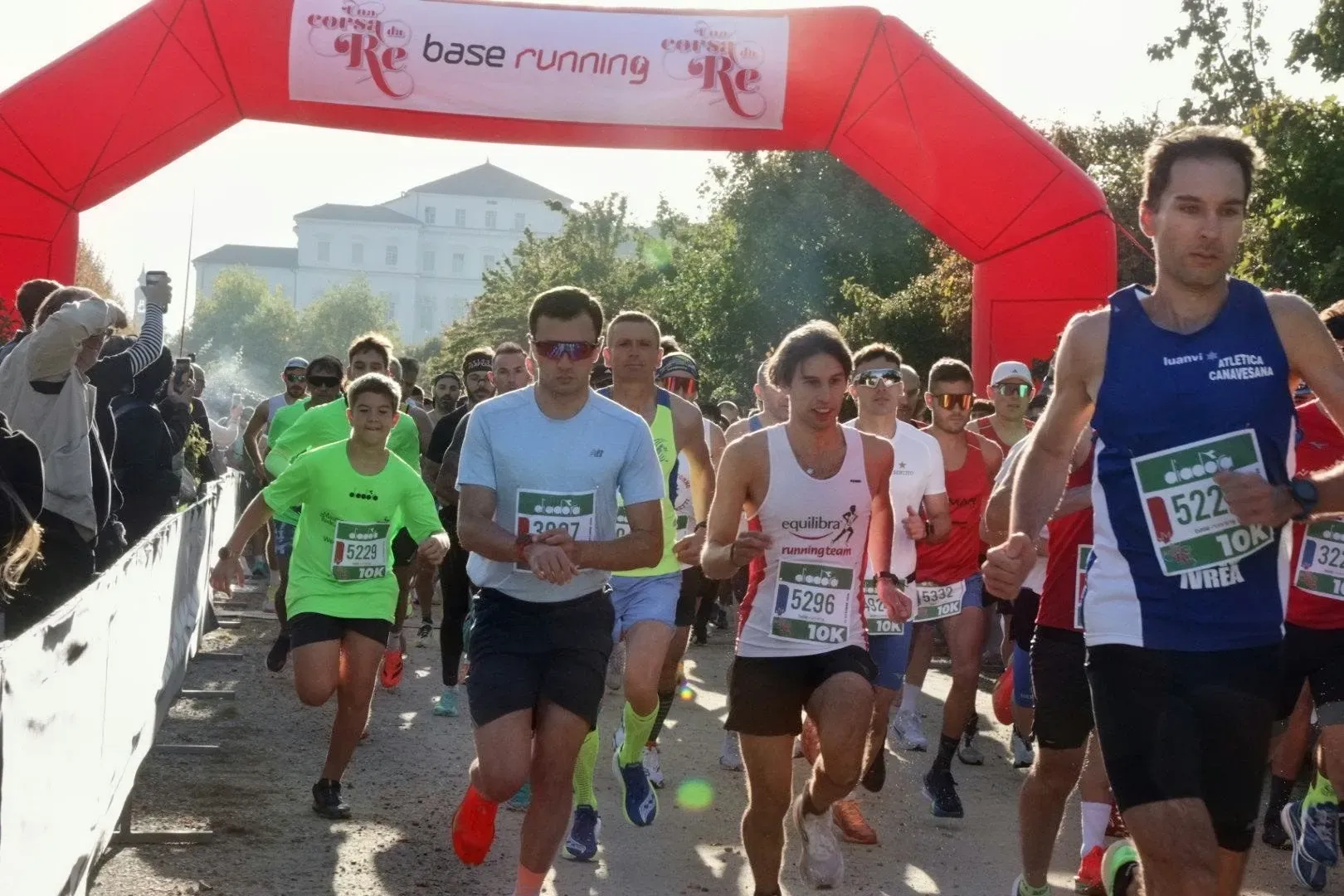
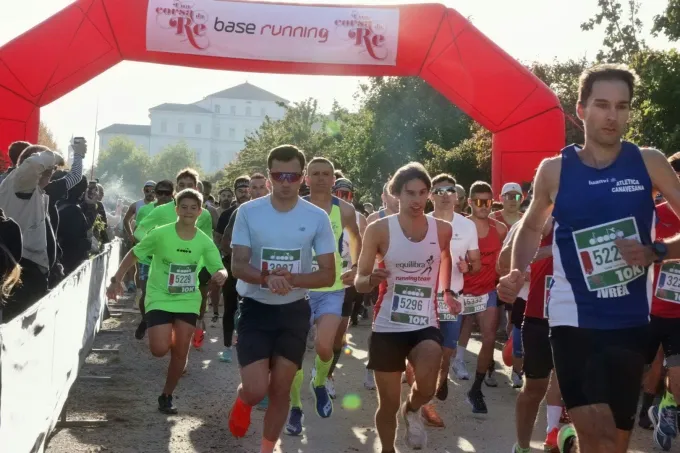
Sunday 25 October 2026, piazza Vittorio, Turin, just before half past eight. Nearly 3,000 athletes are waiting for the start of the Mezza and the Dieci che Vale. Registration closed about ten days ago, because all three races sold out before the deadline. Six months earlier, in April, the same square had seen the start of Base Running’s La Mezza and La Dieci di Torino: 8,000 entrants, both distances sold out.
They are two of the ten races we took to a sell-out in 2026. For Base Running, La Mezza, La Dieci, the TuttaDritta and, at the Weekend Reale in Venaria, all three distances of Una Corsa da Re sold out: 10, 21 and 30 km. For Equilibra Running Team, the Stracirié, the Mezza di Primavera, the Mezza che Vale and the Dieci che Vale. In total, these two organisers’ races brought more than 41,000 runners to the start line.
None of these races filled up in the last week. Each one followed a method that begins months before the start and ends the day after the finish, when work on the next edition begins. This guide sets it out chapter by chapter, with real cases from our projects and the races’ own numbers. Each chapter ends with something to do. The appendices to fill in are in the PDF.
The race is the product: distances, course, race pack and fees
Before any campaign there is one question: why would a runner choose this race? Runners have a calendar full of alternatives, and they decide on a few concrete things: the date, the distance, the course, what they get, the price. Communication can tell that story well, but it cannot make it up.
A distance for every audience
Each distance speaks to different people. Someone running a competitive half marathon is almost always a club member, has a race calendar and chooses well in advance: they look at the course, certification, times and services. A non-competitive 10 km, open to walkers too, speaks to people who don’t see themselves as runners: groups of friends, colleagues, families, people trying their first race. They decide later, and they decide together.
At the Mezza and Dieci che Vale, the non-competitive race was the largest. At the Weekend Reale, Base Running added a 30 km in 2026, presented as the distance for people who want to go beyond the half but aren’t ready for a marathon yet. The 30 km sold out too, along with the 10 and 21 km of Una Corsa da Re.
| Distance | Who chooses it | When they decide | What they look at |
|---|---|---|---|
| 5 km and family run | Families, schools, non-runners | In the last few weeks | Date, location, what’s on for children |
| Non-competitive 10 km | Friends, colleagues, beginners | In the last few weeks, often as a group | Atmosphere, city course, price |
| Competitive 10 km | Club runners, people chasing a time | A few months ahead | Fast course, certification, results |
| Half marathon | Runners with a race calendar | When they plan the season | Course, certification, shirt, services |
| 30 km and marathon | People training for a goal | Many months ahead | Course, aid stations, pacers, travel logistics |
The course sells with pictures
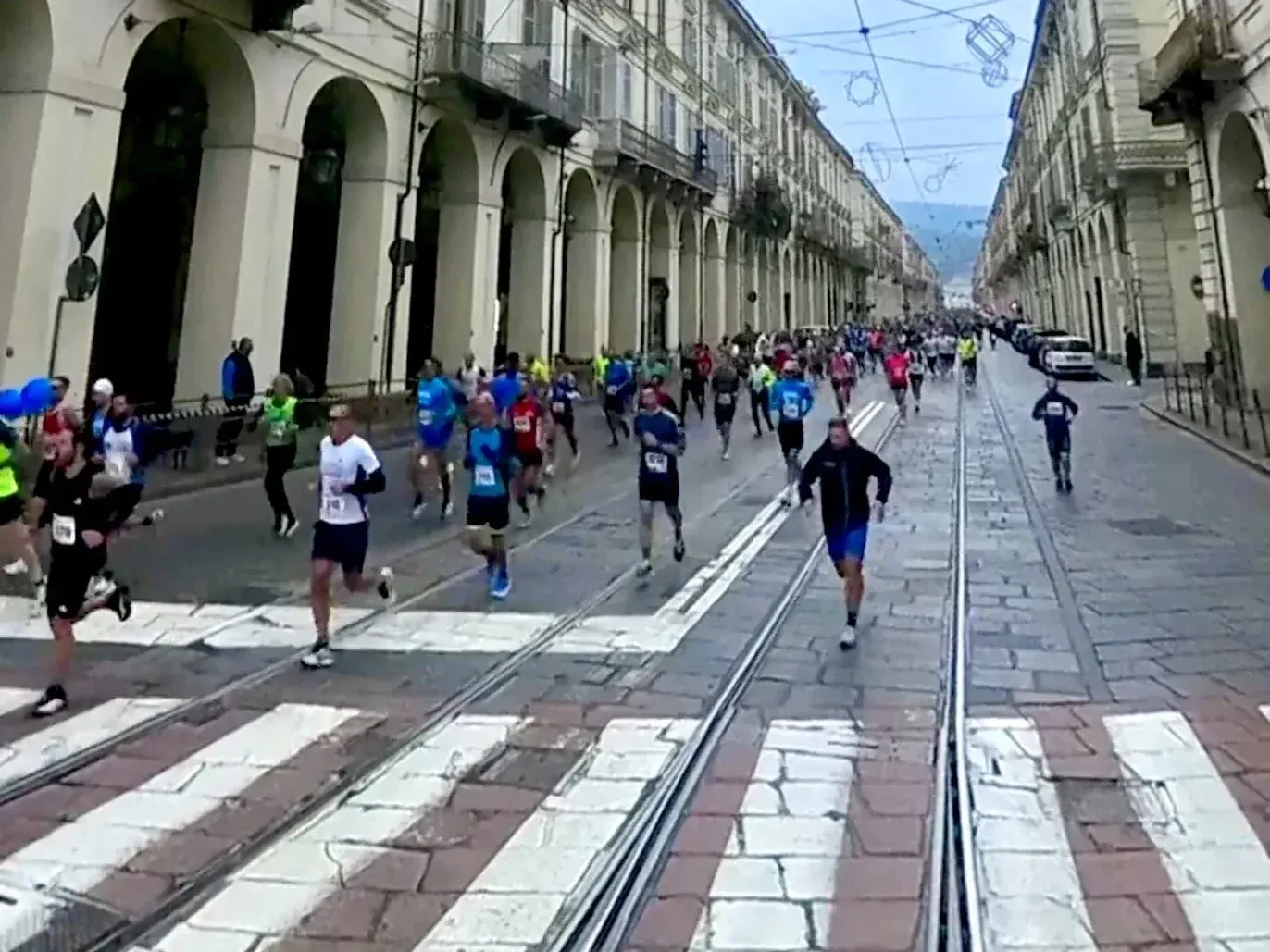
The course is the first reason to choose a race, and the easiest to show. The Mezza che Vale starts in piazza Vittorio, runs up via Po, crosses piazza Castello and continues through the parks along the Dora and the Po. The Una Corsa da Re half marathon runs between the Reggia di Venaria and La Mandria nature park. These are courses you can tell with a video, a map, an aerial photo.
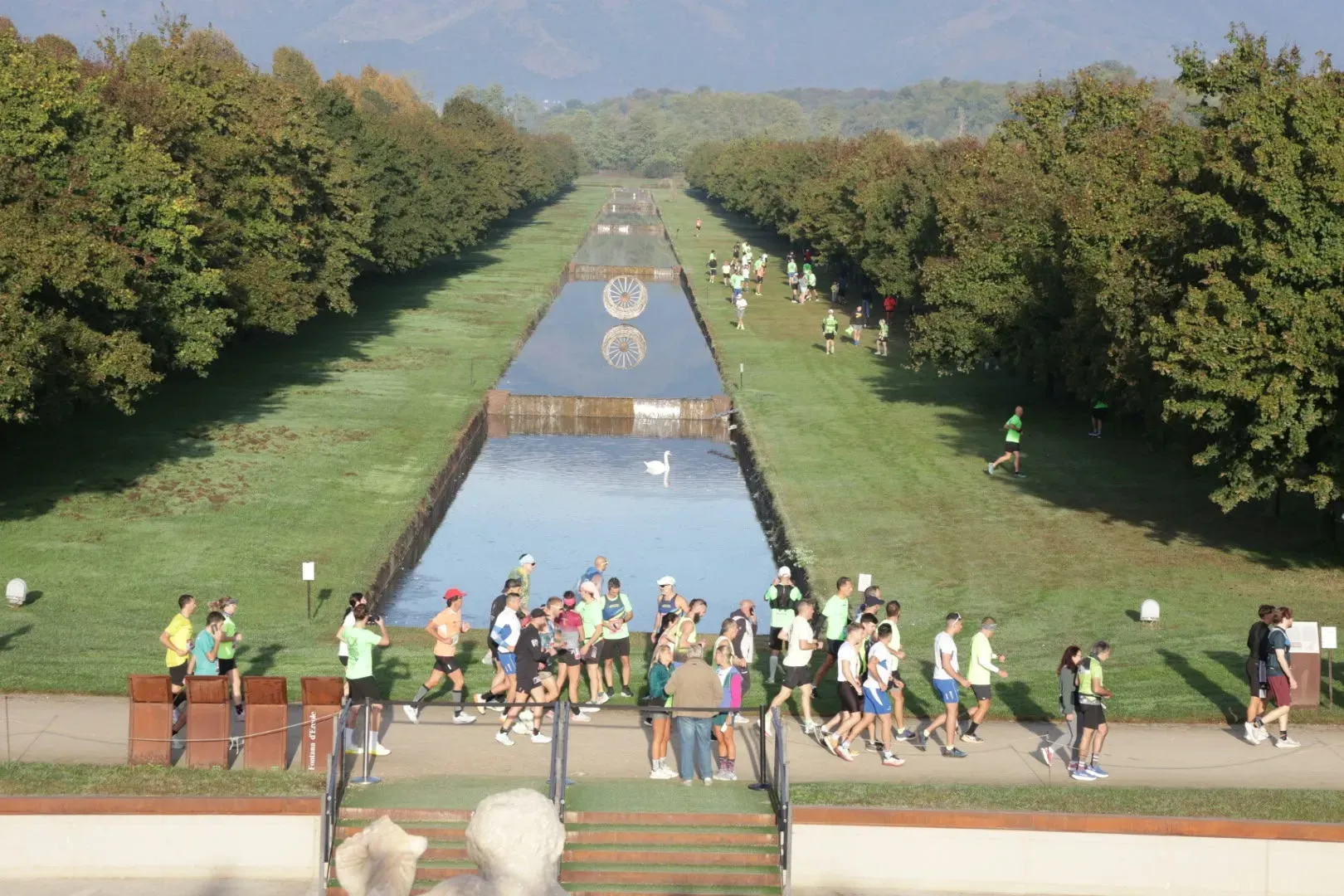
If the course has no monuments, it still has something to say: it’s fast, it’s flat, it goes through a neighbourhood nobody ever crosses on foot, it finishes in a stadium. Base Running’s TuttaDritta says it in its name, which means “dead straight”: ten kilometres in a straight line from piazza Solferino to the Palazzina di Stupinigi.
Race pack, shirt and medal
The race pack influences the choice more than many organisers think. For the Mezza and the Dieci che Vale, the gluten-free packs prepared with AIC Piemonte, the regional coeliac association, are for some runners the reason to pick that race. The technical shirt and the medal should be shown early and well, because they are what runners take home and post on social media.
Fees: a price that sets the pace
Rising entry fees mainly give the communication a rhythm. Every price change is a date with a concrete reason to act: people who already know the race and have been putting it off enter before the fee goes up. For the Mezza che Vale 2026, entry cost €25 until 15 September, €30 until 10 October and €35 after that.
Three rules we use for fee tiers:
- Few tiers, on fixed dates. Two or three fee changes are enough to pace five months. Every extra tier is one more date to communicate.
- The same dates everywhere. Website, registration platform, posts, ads, emails, flyers. A date that differs from one channel to another creates questions and mistrust.
- The last tier not too close to race day. If the race sells out before registration closes, the last fee is paid by people entering in the weeks of highest demand. That is when the race is worth the most.
The entry cap
A sell-out only exists if there is a limit. The maximum number of bibs depends on permits, safety, the width of the start area, aid stations and services: it is an organisational decision, not a marketing one. But it needs to be made early and written down clearly, because it is what lets you say, when the time comes, how many places are left.
Self-assessment question. If a runner who doesn’t know your race asked you in a message why they should choose it over another one in the same month, what would you reply in three lines? If the answer only talks about flawless organisation, the reason to choose is still missing.
To do. For each distance, fill in a line with the audience, when they decide and three reasons to choose it. Then set the fee tiers and their dates: that is where the calendar in the next chapter begins.
The five-month calendar
A runner doesn’t choose a race the week before. They choose it when they plan the season: they decide which half marathon to run in the autumn, put it in the diary and build their training around that date. If your race isn’t there at that moment, in their feeds or their search results, they’ll pick another one.
That’s why, for a half marathon or a city 10 km, campaigns usually start four or five months before race day, which is about 20 weeks. The full reasoning, with the Mezza and Dieci che Vale case, is in the article on when to start promoting a running race. Here we take the sequence you need to fill in the calendar.
Why so early
There are four practical reasons, which we see every season:
- campaigns need time to learn: ad platforms find the right audience after a few weeks of data, and starting late means paying for that learning just when you need entries. Meta, for example, explains on its page about the learning phase that an ad set usually stabilises after about 50 results in the week following the last significant edit;
- the audience to retarget has to be built: someone who visits the race page in July without entering is the easiest person to convince in September, but in September they need to exist;
- fee deadlines only work if someone is waiting for them;
- other organisers don’t wait: in the busiest months of the calendar, whoever reaches the feeds first takes the space.
For a small race or a first edition you can start later with more content; for a marathon you start much earlier. But for a half marathon and a city 10 km, this is the window we normally use.
The six phases
| When | Weeks | Goal | What you do |
|---|---|---|---|
| 5-4 months before | 20-17 | Get found | Complete race page, registration opens, announcement on social media, first campaigns to make the race known |
| 4-3 months before | 16-13 | Give reasons to choose | Course video, shirt and race pack, the team inviting people to run, campaigns driving to the site |
| 3-1 months before | 12-5 | Turn interest into entries | Campaigns to people who visited the site, fee deadlines, community content |
| Final weeks | 4-2 | Close | Last fee, places running out, reminders to people who didn’t finish registering |
| Race week | 1 | Inform | Bib collection, times, course, last-minute notices |
| After the race | +1 onwards | Start again | Photos, videos, results, thank-yous, sponsor report, date of the next edition |
The case: the Mezza and Dieci che Vale 2026
For the Mezza and the Dieci che Vale, the course video came out in July, three and a half months before the race. From September, campaigns worked on two fronts: bringing new people to the race page and bringing back those who had already visited without entering. The two fee deadlines, 15 September and 10 October, were small campaigns in their own right: announced a few days before, reminded the day before, closed the day after.
The sell-out came about ten days before registration closed, for all three races. The website pages said so at the top, and from that moment communication switched to entrants.
Example. In the week of the Mezza and Dieci che Vale, because of another event in the square, Saturday bib collection was moved earlier: 9am to 2pm instead of 10am to 5pm. The notice appeared at the top of the website and on the race pages. Saving a handful of runners a wasted trip to the square is worth more than any campaign.
To do. Mark race day on the calendar and count back 20 weeks. Then add the fee tiers, the date of the course video and the date registration opens. That is the skeleton of Appendix A.
The website and the registration page
Every campaign, every post, every notice leads to the same page. If the race page is complete and up to date, everything else performs better; if a piece of information is missing, every channel pays for it. That’s why you fix the website before spending on advertising.
What a race page needs
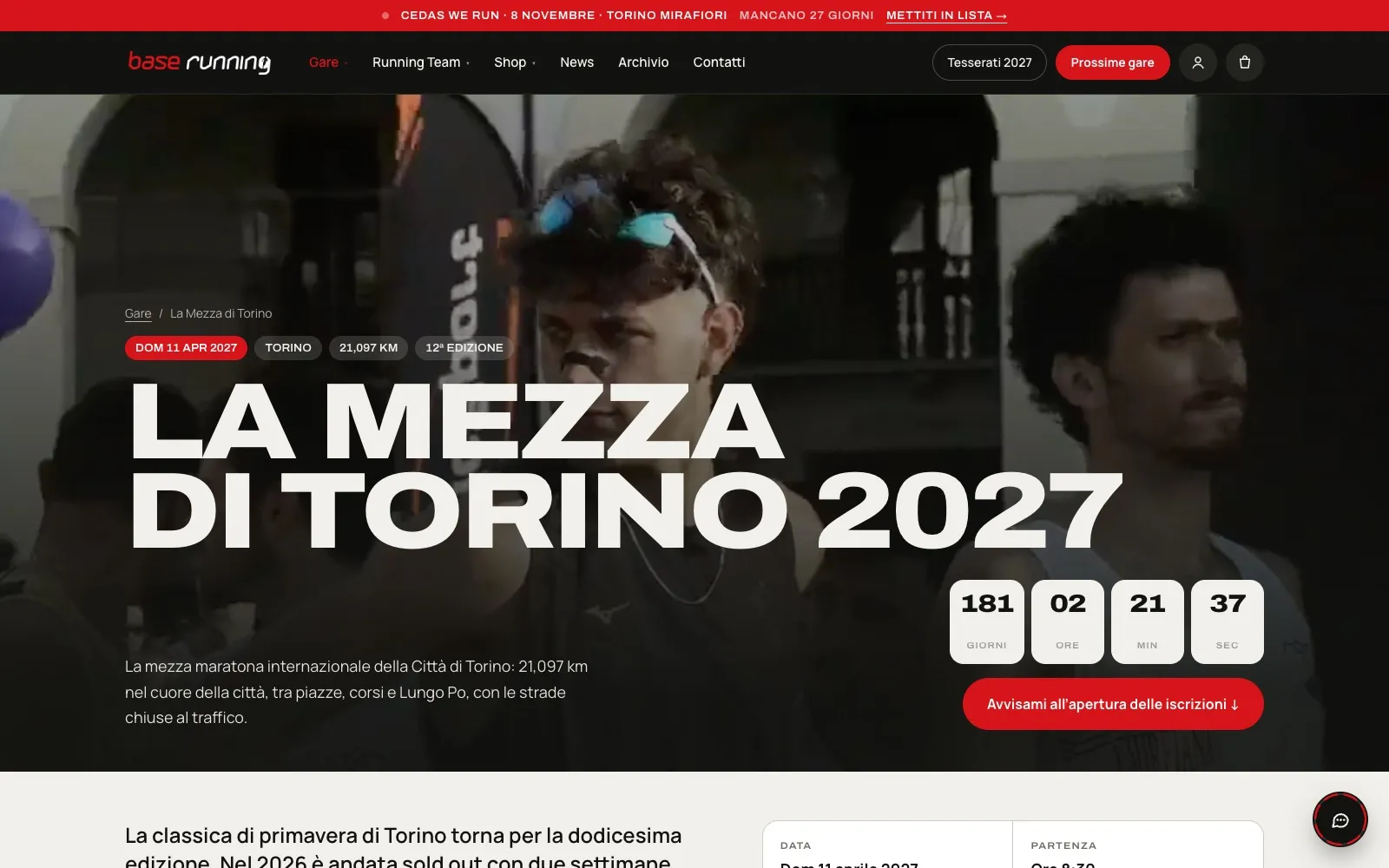
A race page has to answer every question someone asks while deciding whether to enter, without making them search. On Base Running’s new website, which we designed and built from scratch, each race has its own page with a countdown, a header video we shot, a course that draws itself on the map, a downloadable GPX track, the rules and the sponsors’ logos.
This is the list of checks we run on every race page before switching on the campaigns:
- Date, time and start location at the top, readable without scrolling
- Distances, race type (competitive or not) and certification
- Course on a map, elevation profile and downloadable GPX track
- Fees with tier dates, matching those on the registration platform
- What’s in the race pack, with photos of the shirt and medal
- Rules, medical certificate and club membership required
- Registration button visible on mobile at every point of the page
- Schedule: bib collection, bag drop, start times, prize giving
- How to get there, parking and public transport
- Sponsors and partners with their logos
- Contacts and answers to the most frequent questions
- Space at the top for notices: sold out, time changes, weather
Payments and registration
Registration is where you lose the most runners. Every extra step, every form that opens on another site without explanation, every missing payment method is an entry put off. On the Base Running website, payments accept card, PayPal, Satispay and Scalapay. People who abandon registration halfway are the audience closest to a yes: the retargeting campaigns and the emails in the newsletter chapter are for them too.
Getting found on Google
For event pages, Google reads Event structured data: date, location, organiser, event status. Every race page on the Base Running website has it, so Google knows it is a race, with a date and a place. We also cover it in the article on SEO for local events. Race portals are another way in: on Runmaniac, the portal we built, organisers update the listings of their races for free.
The same questions, by the hundred
In the week before a race, questions arrive by the hundred, all the same and at all hours: where do I collect my bib, is there parking, what time does the 10 km start, can I change distance. For Base Running we built an assistant with Conversly, our chatbot: it knows the rules, times, courses, shuttles and services of every race and answers on the website in real time, even at night. Only the questions that genuinely need a person reach the office.
For clubs that also have a team to manage, online membership takes work off the office. The 425 members of Base Running’s Running Team, from 12 countries, sign up, pay and upload their medical certificate on ClubRM, the management software we built for sports associations.
Example. In the 12 months covered by the Base Running case study, the website had 415,000 sessions and 631,000 page views. The site follows the calendar on its own: once a race is over, it puts the next one in the spotlight.
To do. Open your race page on your phone, as someone arriving from an ad would see it, and go through the checklist above. Every empty box is a cost you’ll pay on every click.
Social media and video: making people want to be there
On social media a race doesn’t sell bibs: it makes people want to be there. The plan follows the season: the announcement, the countdown, courses told in carousels, live from the race village, the post-race. Between races, you tell the story of the team, the training, the people.
Real faces instead of an advert
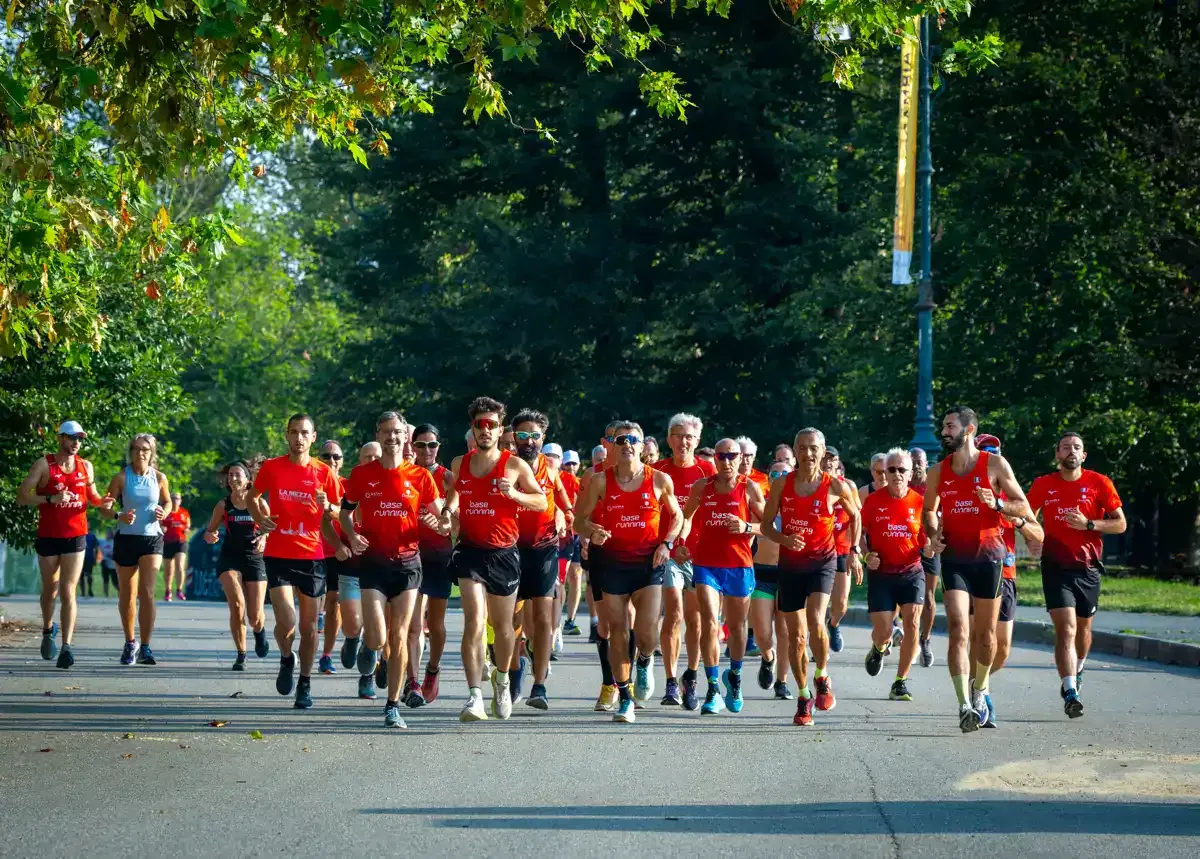
The content that works best has real people in front of the camera. For Base Running, the organiser invites people to run, the coach sets a meeting point in Piazza d’Armi, Viviana explains in the shop what you need for race day. For Equilibra Running Team we shoot vertical videos with the team’s athletes, who poke fun at themselves, train and invite others to join, and with Lucio, the coach. Viewers recognise themselves, and a race organised by a group of friends is best told that way.
The course on video
The course video is the content that works longest. For Base Running, the course of La Mezza draws itself on an illustrated map of Turin on the race page; for the Maratona Reale, the same happens kilometre by kilometre on the map of the Reggia and La Mandria. The same video becomes a reel, the race page header and material for the campaigns.
The content calendar
| Phase | Content | Format |
|---|---|---|
| Announcement | Date, distances, what’s new this year, opening fee | Carousel, short vertical video |
| Reasons to choose | Course, shirt, medal, race pack, services | Course video, carousels, product photos |
| Community | People training for the race, groups and clubs, runners’ stories | Vertical videos, stories, reshared runner content |
| Deadlines | Fee change, places left, sold out | Stories, pinned post, ad |
| Race week | Bib collection, times, notices, race village | Stories, post with practical information |
| Race day | Start, course, finish, podiums | Live stories, reels from the day |
| Afterwards | Photos, videos, thank-yous, date of the next edition | Galleries, reels, numbers carousel |
The numbers of a season
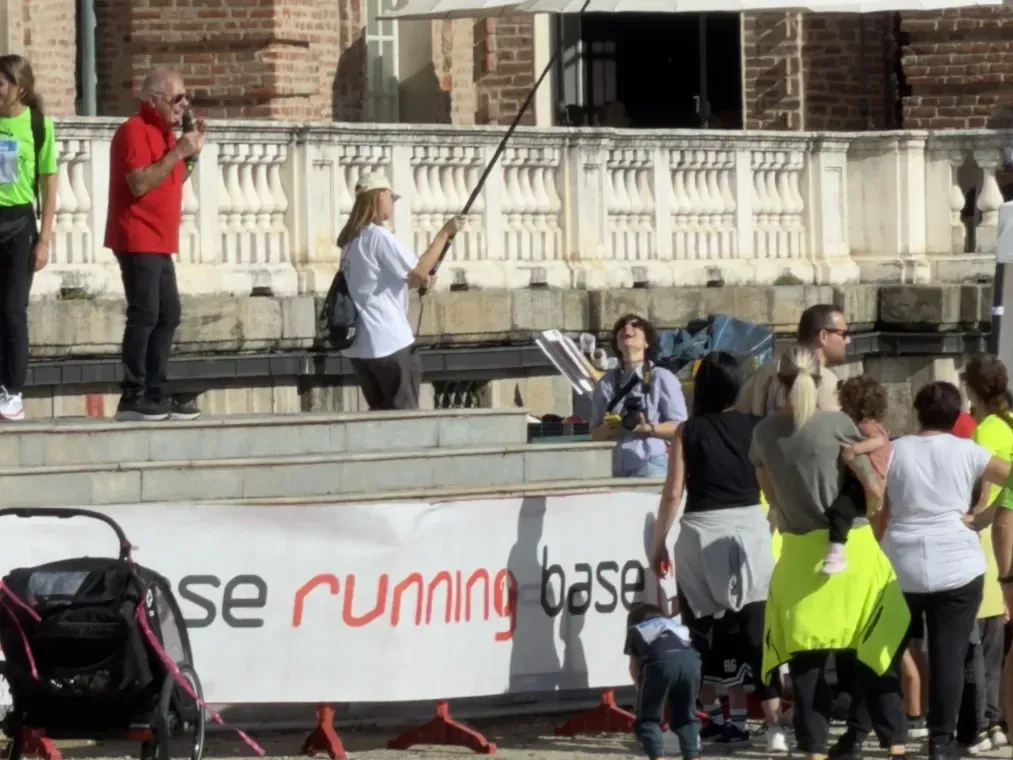
We manage Base Running’s Facebook, Instagram and TikTok accounts. In 12 months they collected 21.2 million views and 170,000 interactions; Instagram followers grew from 7,144 to 13,141. Views cluster around the races: 4.6 million for the TuttaDritta, the peak of the year, and 3.1 million in the month before La Mezza and La Dieci di Torino, 582,000 on race day alone.
Watch out. Photos and videos taken from runners’ profiles should only be reshared with their permission. And content showing recognisable people that is used in ads needs broader consent than an organic post: it’s worth covering this in the race rules and in the release signed by people working for the race.
To do. List the people who can be the face of your race: the organiser, the coach, a volunteer, a runner who has been at every edition. They are the basis of the editorial plan in Appendix B.
Campaigns on Meta, Google and TikTok
Campaigns turn the wish to be there into entries. They work when they start from content that already performs on social media: the people who see them find a race they want to take part in, not an advert. For Base Running, campaigns on Facebook, Instagram, TikTok and Google Ads are built race by race: people who have run before, people living near the course, people looking for a spring half marathon.
What each channel does
| Channel | What it does for a race | When it matters most |
|---|---|---|
| Meta (Facebook and Instagram) | Making the race known to local runners and bringing back site visitors | Throughout the five months, with retargeting in the final weeks |
| Google Ads | Reaching people already searching for a race in that city and season | From the first weeks, when people look for their race of the season |
| TikTok | Reaching a younger audience and people who don’t yet see themselves as runners | In the reasons-to-choose phase, with vertical videos |
| YouTube | The course video, which is longer than a reel | Before fee deadlines |
| Bringing past participants back to the start line | At opening and at each fee change |
Each channel reaches different people at different moments, and the runner who sees a reel on Instagram in the evening may search for the race on Google the next day. For the Mezza and the Dieci che Vale we concentrated campaigns on Meta, the channel where a city race reaches local runners fastest. For larger races, the choice that pays off most is to combine several channels.
Two audiences: people who don’t know the race and people who’ve already visited
On Meta we work on two fronts. Acquisition campaigns bring new people to the race page. Retargeting campaigns are built with a website custom audience, meaning people who have visited the race pages: a small, valuable audience that already knows the race exists and only needs a reason to enter now. That reason is almost always a fee deadline or a shrinking number of places. How to set budget, structure and tracking is explained in the guide Meta Ads for SMEs.
One message for each distance
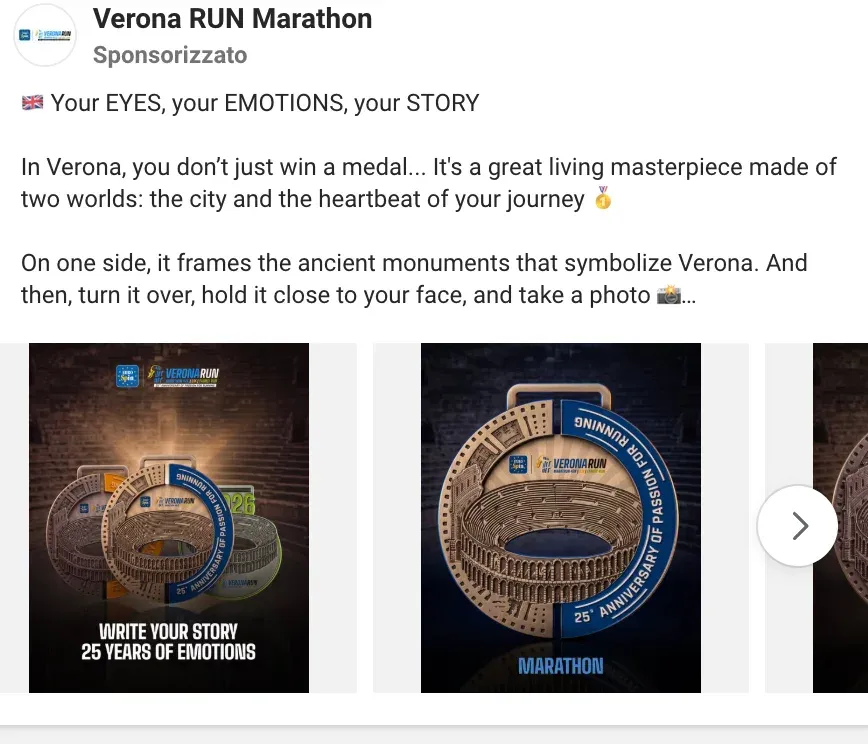
Within the same race, messages should be kept separate. Half marathon campaigns talk about a fast course, FIDAL certification and a technical shirt; 10 km campaigns talk about a morning in the city centre, starting together with everyone, and not needing to be an athlete. The same applies to large events: for the Verona Run Marathon and the Romeo & Giulietta Half Marathon, the Infront races whose Facebook and Instagram campaigns we manage, each distance has its own audience and message, from the challenge of 42 kilometres to the race you run as a couple on Valentine’s Day.
Campaigns abroad
When runners come from elsewhere, campaigns go and find them. For the Weekend Reale we combined campaigns on Meta and Google and also ran them in France, for people who want to combine the race with a visit to the Reggia. Running tourism is a measurable trend: at the Milano Marathon 2025, according to the organisers, 56% of the 10,250 entrants came from abroad, from 106 countries. A race aiming at international runners needs pages, ads and emails in their language.
When to stop them
Once a race sells out, registration campaigns are switched off immediately: every click would send people to a page where they can no longer enter. What stays on, if needed, are campaigns for the next edition or for another race by the same organiser.
Example. In 2026 Base Running’s campaigns collected 6.2 million impressions and 165,000 clicks to the race pages; the Weekend Reale pages had 86,500 visits. We read the numbers of every campaign daily on RunAlytics, next to registrations.
Self-assessment question. Do you know how many entries came in last week, and from which channel? If you have to ask the registration platform for a file at the end of the month to find out, your campaigns are working in the dark.
Newsletters and community
Email is the channel that truly belongs to the organiser. Followers can be lost, and the reach of posts changes with every platform update; the list of past participants, collected with consent, stays. And someone who ran an edition and enjoyed it is the first entrant of the next one.
One email for each phase
For Base Running we write a newsletter for each race, one for members and one for sponsors. Each send reaches 20,900 contacts, more than one person in two opens it, 51.6%, and 316,000 emails were sent in 12 months. For the Weekend Reale, emails followed every moment that mattered: registration opening, the fee change, practical information before the start, plus a newsletter dedicated to the event’s partners.
| Moment | To whom | What it says |
|---|---|---|
| Registration opens | Past participants and newsletter subscribers | Date, distances, what’s new, opening fee and its deadline |
| Before each fee change | People who haven’t entered yet | The date, the price difference, a reason to choose |
| Places running out | People who opened previous emails | How many places are left, if the figure is certain |
| After registering | Every new entrant | Confirmation, what happens next, how to prepare |
| Race week | Entrants | Bib collection, times, course, bag drop, weather |
| After the race | Participants | Thank you, photos, results, survey, date of the next edition |
For more on segmenting the list and automating sends, see the article on email marketing for sports events and the guide to marketing automation.
The community spreads the word
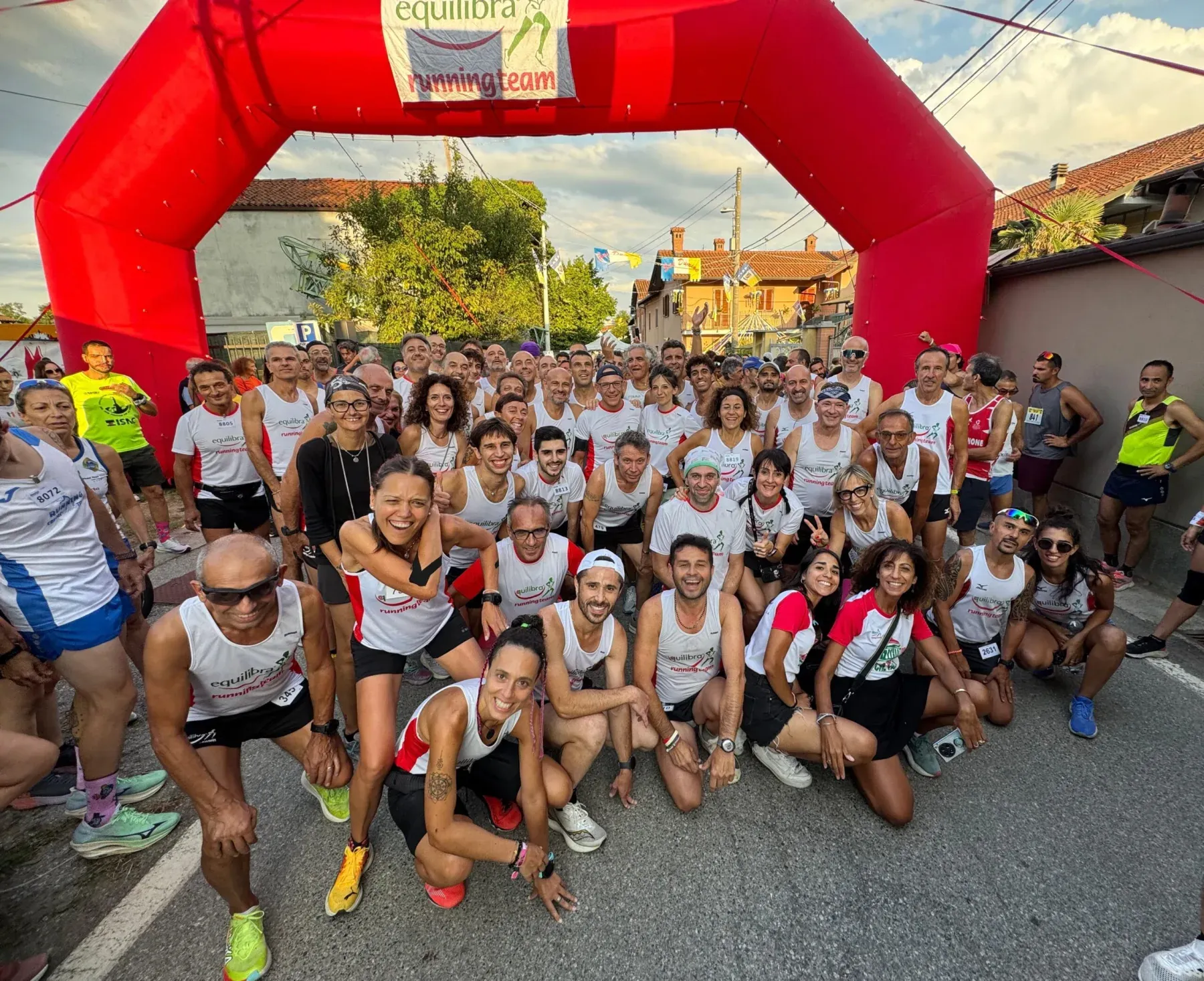
Races also fill up by word of mouth, and a team multiplies it. Equilibra Running Team has a community of more than 300 runners who wear the same red and white shirt: they are the most convincing people when they invite others to a race. Base Running’s team has 425 members from 12 countries. Running clubs, training groups, specialist shops and run clubs are allies worth involving with a group rate or a dedicated invitation.
Watch out. Promotional emails can only be sent to people who have consented to receive them. The race entry form must ask for this with a separate, unticked box, distinct from the consent to process data for registration.
To do. Count how many contacts you have with consent to marketing communications and how many of them have run at least one edition. They are the audience for the first email in Appendix C, the registration opening.
Sponsors and partners
A sponsor doesn’t buy a logo on the arch: they buy the certainty of being seen for the whole season. The logo on race day is the last piece; before that come months of race pages, posts, videos, emails and campaigns where the brand can appear. Organisers need to be able to show it with numbers.
Two customers, one communication
Every part of a race’s communication has two audiences. For runners the website is where they enter; for sponsors it is a medium with measurable traffic. For runners Instagram is inspiration; for sponsors it is a way to reach thousands of enthusiasts. For runners the newsletter is a service; for sponsors it is space inside an email that more than one person in two opens. The five strategies for turning these channels into sponsor packages are in the article on how to find sponsors for a running race.
The sponsor deck
For Base Running we prepared the 2027 sponsor deck, with the numbers of a whole season. They are real numbers, collected over the year, that let sponsors understand what they are buying before they sign.
| What to offer | Where | What is measured |
|---|---|---|
| Logo and link on the race page | Website | Page visits, clicks on the logo |
| Content featuring the sponsor | Social media | Views, interactions |
| Space in emails to entrants | Newsletter | Contacts reached, opens, clicks |
| Product in the race pack | Race pack | Packs handed out |
| Presence in the race village and on the course | Race day | Participants, photos and videos it appears in |
| Final report with the numbers | After the race | Everything measured above |
The post-race report
The report is the piece almost nobody does and the one that decides renewals more than anything else. Once the race is over, sponsors should receive, in black and white, what they got: how many times they appeared, where, in front of how many people. On the Monday after the race we write to the sponsors to tell them how it went; the report template is in Appendix D.
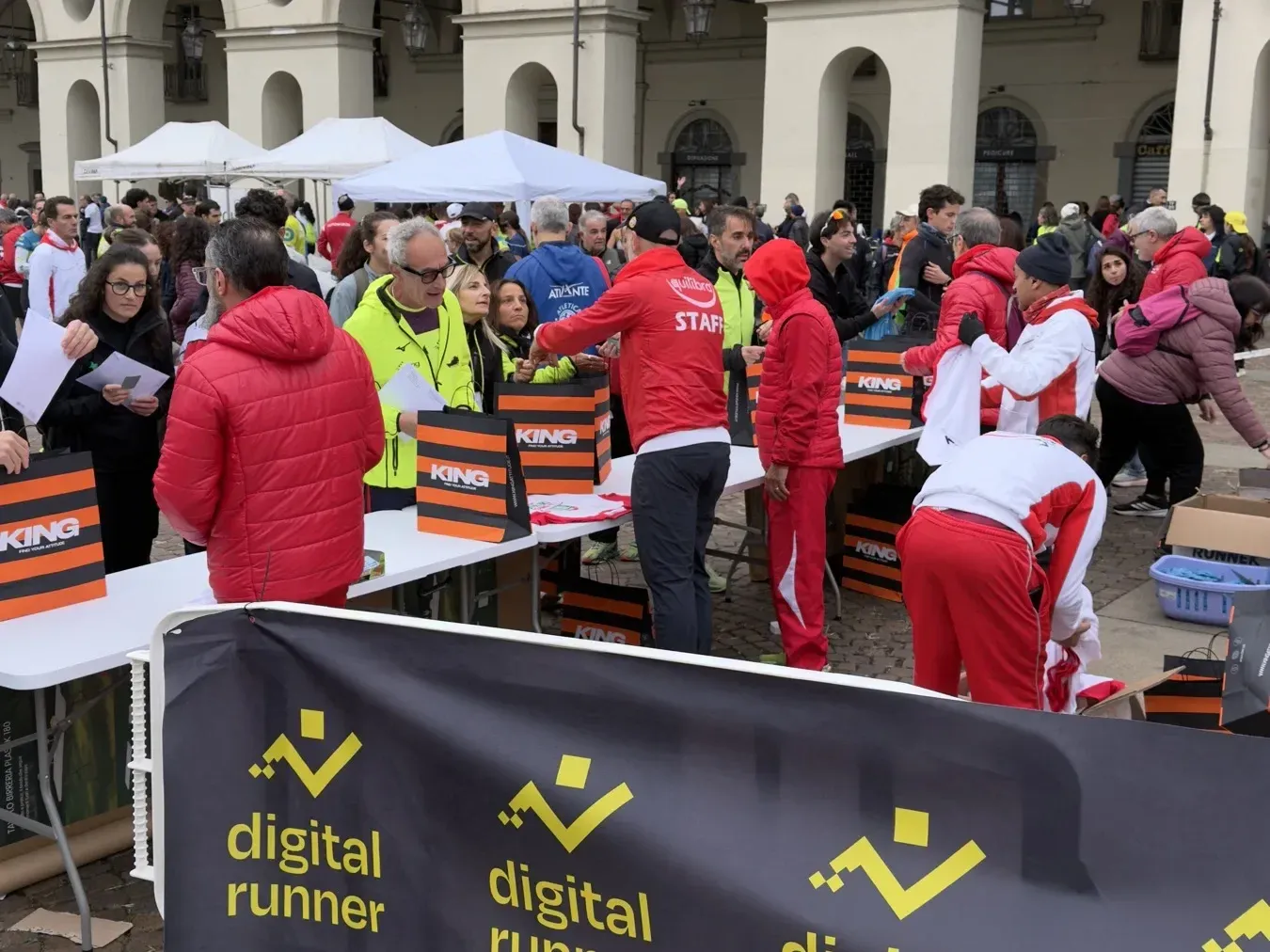
Example. At the Mezza and Dieci che Vale 2026, Digital Runner was one of the sponsors too: our logo was on the official shirts of both races, which nearly 3,000 runners collected in their race pack, and on Sunday morning, at the race pack handout in piazza Vittorio, runners walked past our barriers. We’ve seen sponsorship from the other side of the table as well.
To do. Write down the five numbers from your last edition that a sponsor would want to know: participants, social media views, newsletter contacts with open rate, visits to the race pages, where runners came from. The ones you don’t have are the data to start collecting this season.
Race day and the story told the day after
A race is run in a morning and told for a whole year. On race day you collect the images you’ll use throughout the next season: for social media, the website, sponsors, and the campaigns for the next edition.
The week before
In race week, entrants are only looking for practical information: where to collect their bib, when, where to leave their bags, what changes for traffic. Each piece of information should be given once, clearly, at the same moment on the website, social media and email, and repeated on the right days. And plan for the unexpected: a notice at the top of the website is prepared before you need it.
On the ground, with cameras
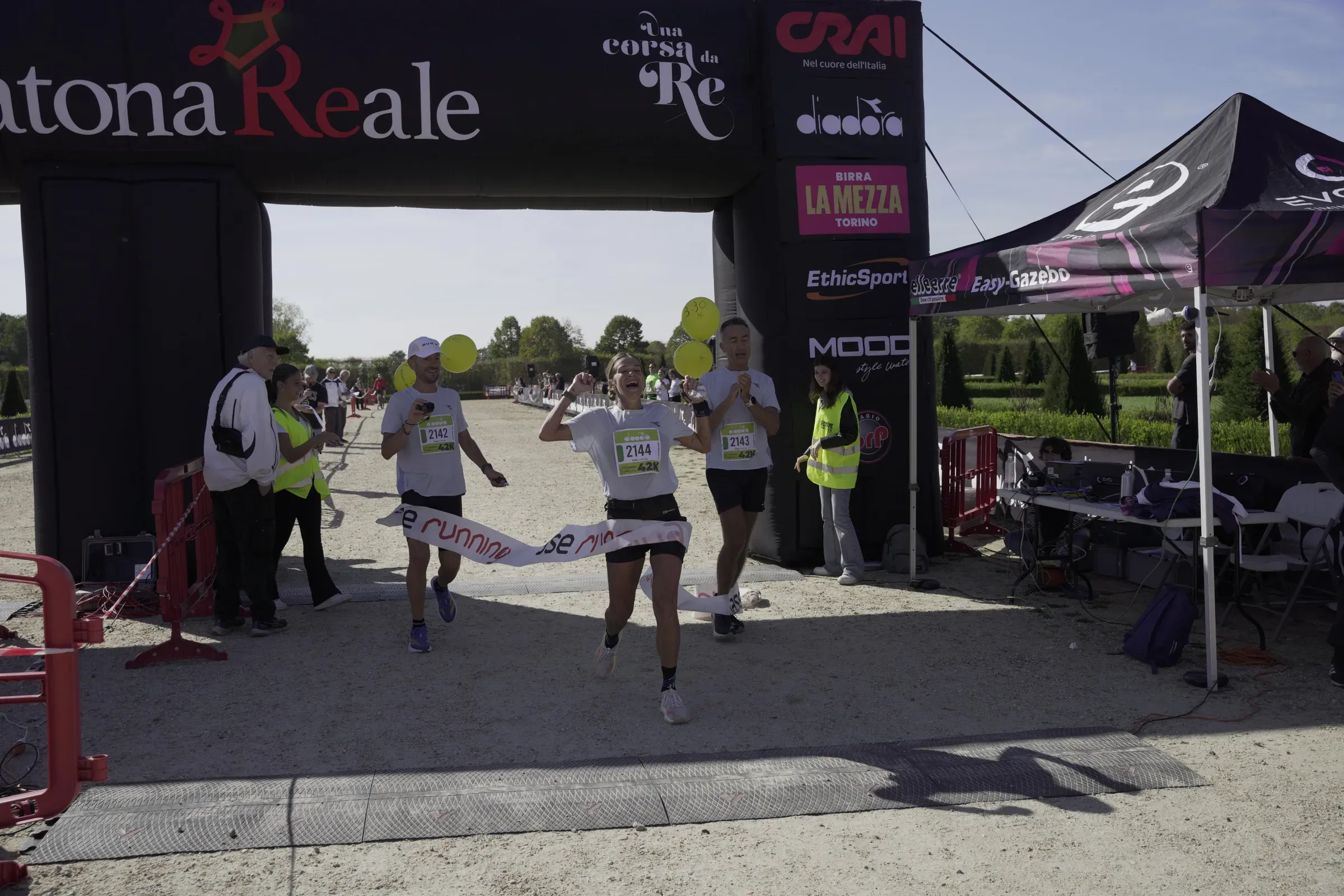
We don’t follow race day from a desk. At the Weekend Reale we were on the ground on Saturday and Sunday with cameras, video cameras and a drone: on stage next to the announcer, at the start, along the canal of the Fountain of Hercules and at the finish in the Gran Parterre. Often we run the race too, bib pinned on: we know where it hurts, where people smile and where you get the best view of the Reggia.
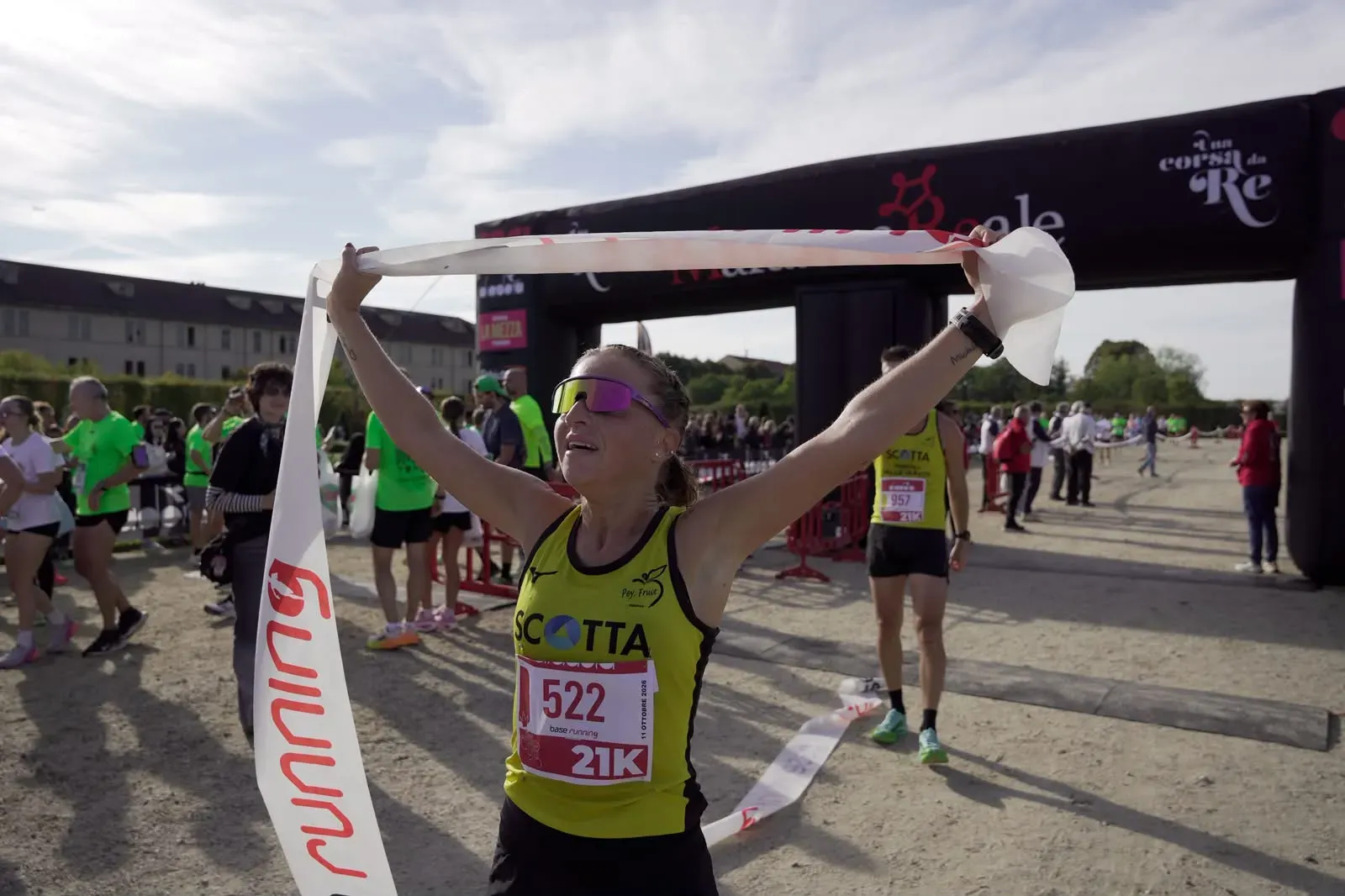
What to film, in order of usefulness for the following year:
- the start from above, with a full start area: it is the image of the sell-out;
- the course at its most beautiful points, for the next edition’s video;
- finishes and faces, which become reels, headers and carousels;
- the race village, bib collection, the volunteers, to tell the story of the organisation;
- sponsors on site, for the post-race report.
The day after
In the days after the race come galleries, results, thank-yous and, as soon as it’s set, the date of the next edition. It’s the moment when runners post their photos and the race is in their feeds without spending anything: support it with the official images and an invitation to save the date. For Base Running, the story of the Weekend Reale became an event page with photos, schedule and podiums; for Equilibra Running Team the same happened with the Mezza and Dieci che Vale.
Watch out. Drone filming during a race is subject to civil aviation rules and the permits for the area. It should be entrusted to a licensed operator and agreed with the organisers and with those responsible for safety.
To do. Prepare a list of the shots to take on race day, with who takes them and where they will be. If there’s nobody to take them, decide now: those images can’t be recovered afterwards.
Measuring and starting again for the next edition
Every race starts from the numbers of the previous one. Daily registrations, where runners came from, the posts and campaigns that worked: this is the information that lets you decide when to start, where to push and what to change. Without it, every edition starts from scratch.
Registrations next to campaigns
The chart that matters most is daily registrations, with the dates of campaigns, fee changes, emails and the most-viewed content laid over it. It shows what made registrations rise and what didn’t. We read it on RunAlytics, our analytics tool, but you can also build it in a spreadsheet, as long as registration data comes with dates.
| What to measure | Where to find it | What it tells you |
|---|---|---|
| Daily registrations, by distance | Registration platform | The race’s pace and the effect of each action |
| Sell-out date or final number of entrants | Registration platform | Whether the calendar was right |
| Where runners come from | Registration platform | Where to run campaigns next year |
| Visits to race pages and where they come from | Website analytics | Which channels bring people in |
| Impressions, clicks and entries from campaigns | Ad platforms | Which campaigns and messages to keep |
| Email opens and clicks | Email platform | Which moments work |
| Social media views and interactions | Account insights | Which content to make again |
| Most frequent questions | Chatbot, email, phone | What’s missing from the race page |
One edition against another
The most useful comparison is with the previous edition, at the same distance from race day: ten weeks out, how many entrants were there last year and how many this year? If you’re ahead, you can speed up the deadlines or bring forward the close; if you’re behind, you know weeks in advance that a push is needed.
The bigger picture
The market Italian races operate in is growing. According to Cesare Monetti’s analysis published by Runner’s World, in 2024 Italian marathons had 53,825 finishers, 16% more than the year before, and half marathons nearly 160,000; women made up 21% of marathon finishers. The full picture is in the article on running in Italy. More runners means more races to choose from: those who know their audience get there first.
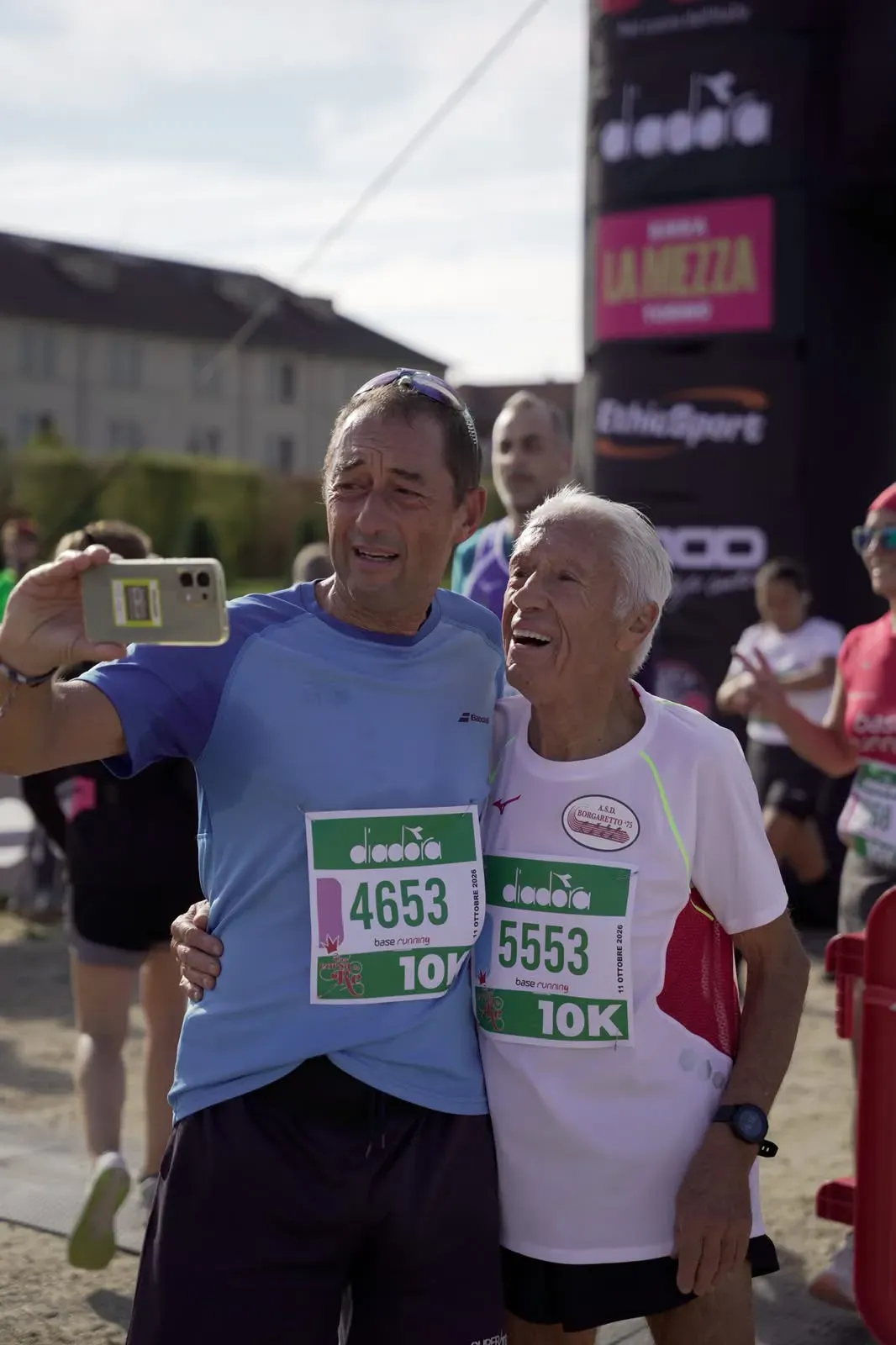
Self-assessment question. Could you say, without looking it up, which week brought the most entries at your last edition, and why? If not, the report in Appendix F is the first job for the next one.
To do. Within fifteen days of the race, gather the numbers in Appendix F and set a meeting to decide three things to keep and three to change. Then write down the date of the next edition and open the waiting list.
The 12 most common mistakes
These are the mistakes we see most often in the races that ask us for help. Almost all of them cost entries without any report showing it.
- Starting campaigns a month before the race. The platforms have no time to learn and the audience to retarget doesn’t exist yet.
- Sending people to an incomplete page. If the course, race pack or fees are missing, people arriving from an ad go back.
- The same message for every distance. Someone training for a half and someone looking for a first 10 km with friends need to hear different things.
- Fee deadlines announced only once. Each change should be announced, reminded and closed, with the same dates on every channel.
- Fees without dates. Without deadlines, the September campaign and the October one say the same thing, and people who put it off keep putting it off.
- A course shown only on a map. A course video shows what a map can’t.
- Adverts instead of people. The organiser, the coach and the runners are more convincing than any graphic.
- No email to past participants. The easiest audience to bring back to the start line gets no invitation.
- Campaigns left on after the sell-out. Money is spent sending people where they can no longer enter.
- Race day with nobody filming. A whole year’s worth of communication images is lost in one morning.
- Sponsors without a report. Renewal is decided on an impression instead of numbers.
- Disappearing after the race. The following weeks are the best time to collect contacts, show the images and announce the next edition.
Quick self-assessment
Count how many of the twelve mistakes you recognise in your last edition:
- 0 to 2: the race has a method; the work is on calendar details and measurement;
- 3 to 5: review the race page, fees and calendar before registration opens next time;
- 6 or more: start again from the first chapter, with Appendices A and B, and give yourself twenty weeks before the next edition.
Watch out. The sell-out isn’t the end of the work. When registration closes, the goal changes: making the day great for those who are there, collecting images and stories, preparing the next edition.